

For decades, meritocracy has been regarded as the core engine driving China’s leapfrog development. Within the economic system, this mechanism rewards diligence, competence, and efficiency, tightly linking individual effort to material reward and ensuring that the public’s pursuit of an abundant material life is fulfilled.
In China’s political machinery, a cadre selection and evaluation system grounded in performance assessment ensures that decision-makers are tested and competent, while promotion incentives encourage them to balance short-term local interests with the nation's long-term goals.
In 2020, China’s crude steel output surpassed one billion tons for the first time, reaching a historical peak before gradually declining. That figure also marked China’s formal entry into a post-industrial society. As anxieties over material scarcity have largely dissolved, the long-obscured flip side of meritocracy has begun to surface.
In education, the single metric of test scores has narrowed the developmental pathways available to young people, compressing the full range of life’s possibilities into a contest of exam-taking ability. Given that admissions to top universities remain relatively fixed in number, this evaluation system has produced no matching gains in development; instead, it has intensified unnecessary, excessive competition. Participants pour in ever more effort, while overall returns fail to rise; this is the exact meaning of involution (内卷).
At the level of social psychology, the accelerating adoption of artificial intelligence has steadily amplified AI’s displacement of entry-level positions (at least what people believe to be), and the labor market’s pursuit of “quantifiable performance” has been magnified further still, with the threshold for success raised ever higher. Even as “super-individuals” rise to prominence, ordinary people feel more acutely than ever that they are replaceable. Meritocracy’s promise that “hard work will surely pay off” has grown more fragile than at any time before, fueling the anxiety that pervades today’s youth.
May 4 is China’s Youth Day. On this occasion, I’d like to share an essay by Mr. Wang Mingyuan王明远, written for Professor Lian Si’s new book A Journey Without a Map无图之旅-一代青年的自我寻路. Wang is a researcher at the Beijing Reform and Development Research Association and a senior, well-connected scholar of the history of Reform and Opening Up. He previously worked at China Economic System Reform Magazine and the China Society for Economic System Reform. He also runs his own WeChat public account, Fuchengmen No. 6 Courtyard (阜成门六号院).

Professor Lian Si is a famous social scientist with a long-standing focus on the values of successive generations of Chinese youth. He once captured the precarious lives of college graduates with the term “ant tribe,” and in his new book, he continues to probe the fate of young people. He also serves as Deputy Director of the School Department of the Central Committee of the Communist Youth League. I had the opportunity to speak with him once before, and I was deeply impressed by the empathy he expressed toward the realities facing Chinese youth, as well as by the precision of his understanding of the motivations behind their behavior.
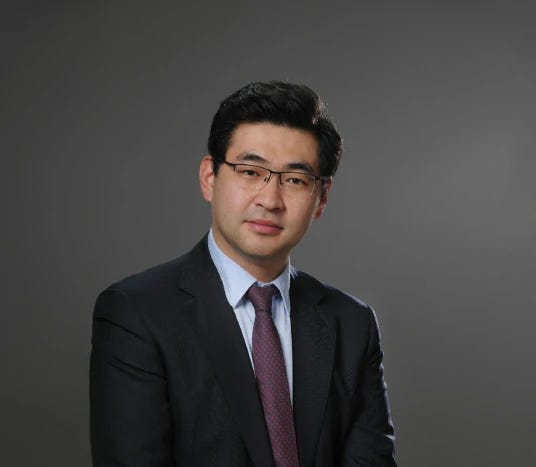
In his book, Lian Si pointed out that meritocracy is, in fact, a modern disguise for hierarchical order; it stratifies young people through labels such as income, educational credentials, and rank. He calls for policies that grant young people greater room to make mistakes, that offer better-protected working conditions, and that reserve opportunities for others to switch tracks in life. To my mind, all of these points, at a deeper level, reflect a more substantial commitment to “investing in people” and strengthening the social safety net for the young.
Thanks to Wang Mingyuan’s kind permission, I had the chance to publish the English ver of the piece
Farewell to Meritocracy, Restoring the Essential Value of Youth: A Reading of Lian Si’s A Journey Without a Map
“The bottom line of a civilized society is not that everyone can succeed, but that even the ordinary retain dignity and worth. Genuine social progress does not lie in turning everyone into a winner, but in allowing ordinary people to live with decency; not in compelling everyone to climb upward, but in ensuring that those who do not climb are not trampled underfoot.”
—Lian Si, A Journey Without a Map, p. 356
May Fourth Youth Day has arrived, and so it seems fitting to talk about young people. Today, the question of youth is becoming one of the decisive questions shaping China’s historical destiny. Why do I say this?
First, China currently faces a host of pressing problems—technological chokepoints, intensifying international competition, social stability, and sustainable development—and from the perspective of who must actually solve them, all of these come down to how well we do youth work. Resolving these difficulties depends, above all, on unleashing the potential of the young. Young people may be immature and imperfect, and in terms of social resources they are a “marginal group,” yet they are also the most creative; they are, in the end, the masters of the future, and the only ones with the right to define what that future will be.
Whether China can convert the intellectual and demographic advantages of its youth into a developmental advantage is the key to whether we achieve our modernization goals. Successful nations, in the end, are those that allow each new generation to fully realize its potential. Failed nations are those in which the energies of the young find no outlet, or are exhausted in the internal frictions of social conflict.
Second, youth work today faces unprecedented new challenges. In the past, youth work was largely about questions of survival, education, and development—at its core, raising the cultural level of young people and expanding their opportunities to make a living. But this generation, especially those under twenty-five, are themselves natives of an information-based, industrialized society. Their worldviews, aspirations, and modes of reasoning differ markedly from those of the post-1970s and post-1980s generations.
The opportunities the times can offer no longer match the capital and expectations young people bring to the table; the mechanisms of social management increasingly clash with their patterns of behavior. The younger generation is expressing its emotions in its own way. Over the past two or three years, vocabulary like “lying flat” and “anti-involution,” and behaviors such as “mourning the Ming” or the Zibo barbecue craze, should not be dismissed as fleeting internet subcultures—they are refractions of the psychological and existential condition of the young.
“Mourning the Ming” is not really about debating history or pining for the Zhu imperial house; it is a way of expressing rebellion against “institutionalized” information and orthodox values. The millions of college students from northern China descending on Zibo for barbecue, or the tens of thousands of students night-cycling between Zhengzhou and Kaifeng—at heart these are searches for an outlet from the suffocation of campus management, and cautious expressions of longing for a more uninhibited way of life.
But among those who hold society’s resources and command its public discourse—nearly all of them middle-aged or older—those genuinely capable of listening to the voices of the young are vanishingly few. Whether they are intellectuals indignant in the face of social injustice or officials wielding local power, whether their political values lean left or right, when they speak about youth issues they almost reflexively assume a posture of instruction or persuasion, often giving off what young people mockingly call the “old man flavor”老登味 or “patriarchal vibe.”爹味 This only makes the problem more intractable.
Last month, I received a copy of A Journey Without a Map by the renowned sociologist Lian Si. It was a refreshing surprise, followed, after I read it, by a kind of excitement and emotion I had not felt in a long time. Based on years of fieldwork, this rare book understands young people from a level, listening posture and asks how to help them grow, rather than lecturing them in bureaucratic or paternalistic fashion. It concerns itself with the circumstances of countless ordinary young people, not with celebrating success stories. The book is suffused with the humanistic concern proper to an intellectual, and supported by sound, professional analysis. Below, I share some of its insights.
An Authentic Record of Youth Lives and Mindsets in the Post-Industrial Era
If Lian Si’s Ant Tribe offered the most vivid historical portrait of young people during China’s industrial age, A Journey Without a Map offers a comprehensive and finely textured picture of how the historical forces of the post-industrial era—technological transformation, urbanization, globalization, and a revolution in social values—are reconstituting the lives and mindsets of the young.
The first shift is the “de-institutionalization” or “decentralization” of work. In the past, whether in agrarian or industrial societies, work was institutional in nature: non-agricultural employment was tightly bound to organizations, anchored either in public-sector units or in firms. The spread of digital technology has now broken work free of its old constraints of time and place, dissolving the strong link between worker and “work unit.” For the majority of young people, work has become “non-institutional” or “decentralized.”
A Journey Without a Map selects ten groups representing the social “median”: livestream hosts, industrial workers, high-tech professionals, the new bohemians of the arts, freelancers, small-town youth, programmers, grassroots civil servants, employees of social organizations, and delivery riders. Through careful interviews, the book traces their life stories and inner journeys.
Of these ten groups, only industrial workers, grassroots civil servants, and those in social organizations remain within traditional institutional frameworks; the other seven have all drifted toward de-institutionalization. China now has more than 200 million workers in flexible employment. While this certainly reflects the difficulties young people face in the labor market, it also reflects the fact that, for a substantial share of them, this has gradually become a chosen—even preferred—new way of working.
The second shift is an unprecedented intensification of “modern” consciousness around self-worth, dignity, freedom, and rights. Young people of earlier generations, even the post-1980s, tended to make life choices on utilitarian grounds—income, promotion, and so on. This generation, shaped by revolutionary changes in their educational, material, and informational environments, places personal feeling at an unprecedented height. Hence the popularity, among the young, of concepts that bewilder their elders: “rectifying the workplace,”整顿职场 “emotional value,”情绪价值 “spending to please oneself.”悦已消费
The convergence of this value shift with technological change is one of the root causes of the increasing de-institutionalization of young people’s careers. Their compliance with rules and material incentives is weaker than ever, and their friction with established institutions and values has intensified—another reason why, in recent years, youth have been so frequently “problematized.”
The third shift is that, although material scarcity is no longer the issue, existential uncertainty and anxiety are on the rise. Technological change has separated employment from the work unit. The upside is a lower threshold of entry and more job opportunities for everyone—if we take 2012, when China essentially completed its industrialization, as a marker, the new economy built around digital infrastructure has since generated roughly 150 million additional jobs, bringing China’s non-agricultural employment ratio close to 80% last year. But the accelerating pace of technological iteration and the deepening capitalization of industries have introduced enormous uncertainty into young people’s working lives, accompanied by an unease and anxiety about where they will land next. Although they have shed the traditional bonds of authority within the work unit, they have inherited the more concealed forms of control that come with technology and capital. The freedom they hoped for has not materialized; if anything, the constraints upon them are now omnipresent.
In sum, this generation is walking a path quite different from any before. Their careers and lives no longer follow fixed coordinates. They enjoy more freedom and greater autonomy over their own fates, but they also face many challenges and confusions. Lian Si calls this entirely new mode—self-navigation amid pervasive uncertainty—”a journey without a map.”
Through his interviews, we see that the chemical reaction of these three transformations is reshaping not only those in new industries but also workers in traditional occupations, whose mentalities and circumstances are changing too.
Take grassroots civil servants. The old stereotype is of complacent, supercilious, indifferent men who spend the day with a single newspaper and have nothing to worry about. The reality is that today’s grassroots civil servants—whose educational credentials have improved fundamentally—include many idealists, and their professional capacities are far above those of the previous generation. The improvement of grassroots services in recent years owes much to this generational turnover. Yet with sharply heightened performance evaluation pressure, the formalization of administrative procedures, and constant scrutiny from both superiors and the public, the work of these young civil servants is anything but easy. The room for individual personality and talent has narrowed considerably.
A Reflection on the Reigning Cult of Meritocracy
Another intellectual contribution of A Journey Without a Map is its diagnosis of how meritocracy alienates human worth—a diagnosis that helps explain young people’s anxiety and resigned coping.
A value system centered on results—celebrating effort, success, and wealth—undeniably propels modernization. But the problem in China today is that, lacking a humanistic counterweight, meritocracy has come to dominate social evaluation almost completely. Aided by the spread of management science and digital technology, it has insinuated quantifiable indicators into every domain of life, inverting the relationship between tools and ends across society. Human beings have become machines living for their metrics. As Lian Si puts it, “The mutual coupling of market mechanisms, algorithmic distribution, and performance assessment has tightened ‘success’ grip on the daily lives of the young.”
I share this view deeply. Today, when universities recruit faculty, what they look at first is not academic ability but quantifiable indicators: whether the candidate’s first degree is from a “Project 985” school, how many papers in CSSCI journals they have published, how many national-level grants they have won. Beijing’s most famous matchmaking corner—the northeast corner of Zhongshan Park on weekends—is a vivid arena of meritocracy in action. Here, young men and women are reduced to a numerical index of income, education, and height. Onlookers gaze in worshipful admiration at those with the most prestigious degrees, the highest titles, the largest paychecks. Whether someone has a sound personality, emotional intelligence, moral integrity, or long-term potential are essentially invalid parameters. Anyone bold enough to foreground such qualities at work, in school admissions, or in courtship risks being labeled “naïve,” “overly idealistic,” or “useless.”
Lian Si perceptively observes that meritocracy is, in fact, a modern disguise for “hierarchical order”—it stratifies young people through labels such as income, educational credentials, and rank. “The bloodline hierarchy under meritocracy does not proclaim noble birth in any explicit law; it embeds itself silently into public discourse and individual minds through words like effort, ability, performance, and willingness.” “It reproduces itself culturally, narrowing the diversity of life paths into a single road, and quietly implanting self-discipline into both conscience and desire.”
Meritocracy has narrowed the developmental paths available to the young and intensified competition. This is why even upper-middle-class families in Haidian remain gripped by the fear of falling, and trapped in the anxiety of ceaseless “chicken parenting.”鸡娃 The new generation, raised within the meritocratic logic of an industrial society, may appear to have higher degrees, better foreign-language skills, and more cultivated hobbies than their predecessors. Yet performance metrics have atomized and fragmented their abilities, and the most vital capacities—thinking and creativity—have not necessarily improved. They may even have declined.
What contradicts meritocracy’s incentive logic is this: once the wheel of history turns into the post-industrial age and channels of upward mobility narrow, continuing to demand and assess young people through meritocratic criteria can only deepen their sense of frustration and powerlessness. After 2021, the inflection point in China’s economic development, terms like “lying flat,” “involution,” and “anti-involution” came into wide circulation. This is not “meme play” or “internet subculture”—it is the manifestation of a contradiction between the social evaluation system and social reality.
What Makes a Youth Most Meaningful, and What Society Owes the Young: Philosophical and Institutional Reflections on the Predicament of Youth
In his book, Lian Si does not, in the manner of “successful people,” instruct young people on how to live. Instead, he answers a question that society itself needs to redefine: what kind of youth is most meaningful? He writes: “The bottom line of a civilized society is not that everyone can succeed, but that even the ordinary retain dignity and worth.” Lian Si argues that we must dismantle the meritocratic narrative that exalts the strong and move toward a pluralism of life paths; that we must respect the choices of the younger generation and accept their ordinariness; that we must abolish the utilitarian, externally imposed “social pricing” of careers, and instead use as our compass whether one’s work benefits others and accords with one’s own heart. This is a return from instrumentalization to the essence of human life—and it is fully consonant with the humanism of Marxism.
Lian Si also displays the professional rigor of a sociologist. For each of the ten occupational groups, he proposes specific recommendations to improve their conditions. The core thrust, in my reading, is this: a shift from the past emphasis on supporting youth through technological supply to strengthening youth through institutional supply.
In all candor, the level of anxiety among Chinese youth is disproportionate to the country’s level of economic development and opportunity. China is on the cusp of crossing the high-income threshold. In the eastern regions and major cities—precisely where anxiety runs highest—social development has approached OECD levels. China’s growth rate, while not what it was at the turn of the century, remains second only to India’s among major economies. Young Chinese, by rights, should not be this anxious.
Looked at from another angle, we find that an important source of youth anxiety is inadequate institutional protection. Our society lacks a mechanism to incentivize sustained creativity, lacks a mechanism that fully recognizes the worth of persons, and lacks adequate systems of social assistance and welfare. This is a sentiment shared by everyone from high-tech entrepreneurs at the top of the income distribution to flexible-economy workers and livestream hosts at its lower and middle reaches.
This is what Lian Si calls for at the close of his book: “This book is not about telling young people ‘what you should do,’ but about asking society ‘whether we can’: whether we can, at the policy level, grant young people greater room to make mistakes; whether we can offer better-protected working conditions for some; whether we can reserve opportunities for others to switch tracks in life.”
There are three kinds of books. The first is a complete, original work, written in a single sustained effort, grounded in serious, rigorous, logically coherent thought. The second is a collection assembled from previously published articles. The third is the kind put together by gathering several authors—you write one piece, I write another—and stitching the result into a volume. In my view, only the first kind truly deserves the name “book.” Today’s publishing industry is so prolific that anyone can put out a book, yet the first kind accounts for less than one percent of what is published. Despite his many social commitments, Lian Si has produced in A Journey Without a Map an original work grounded in rigorous investigation and careful analysis. Every word is considered; not a sentence is wasted. In an age awash in academic fast food (or academic garbage), this is a rare luxury.
I rarely write reading reflections. Bad books do not merit comment, and good ones I dare not comment on lightly. Counting them up, I have written endorsements for only four books, all at the invitation of the author or publisher: Michel Bonnin’s The Lost Generation: The Rustication of China’s Educated Youth, Ezra Vogel’s Deng Xiaoping and the Transformation of China, Wu Jinglian’s China’s Economic Reform Process, and Hu Deping’s The Private Economy Advancing with the Times. This essay, by contrast, I have written entirely of my own accord, moved by what I read—as a tribute to China’s 370 million young people, and as a tribute to the scholars who still take original work seriously.
More to read:
Lian Si on "Involution" and "De-involution" of Chinese Youth

After weeks of intense Two Sessions, I finally had a chance to work on readings about Chinese youth. It's particularly noteworthy that the Chinese government has announced intentions to address the problem of overtime work. Since 2015, average working hours in China have steadily increased, a trend that even the pandemic has been powerless to reverse.
Artical Share-The Values of Chinese Youth

For today’s episode, I decided to refocus on the values of Chinese youth. The pieces I bring today come from Professor Lian Si(廉思), an excellent social scientist focusing on the values of different generations of Chinese youth. He coined the term "ant tribe
Beyond "Crossing the River by Feeling the Stones" Inside the Making of China’s 1984 Economic System Reform Decision

For today’s episode, I want to share an article about the history of China’s Reform and Opening Up — a turning point that reshaped the nation’s economy and society. Despite the high cost, I always believed that studying contemporary Chinese history should be a required course for China watchers.
I think the transistion Wang seeks may be aided by distinguishing between Labor and Work. I am only familiar with the two terms in Spanish, French, and German, languages where industrialization was driven by pursuit of maximum return on capital as private property. I believe there are two terms in Chinese.
I have found the distinction useful to my own emotional stability and in teaching Marxism to creative "ordinary people" in late capitalist cities of the former slave states of the US where I have lived most of my life..
I am an 87 year old U.S.sociologist, socialist, and social artist. When purged from my academic labor for teaching socialism not sociology, I adopted the definition of a German artist I heard speaking of art in Greece: "Art conveys what cannot yet be conveyed in the language of science or prose."
Economically supported by my husband, 'tho known as a feminist and Marxist, I accepted my identity as in accord with the sexual division of labor, mine being the labor of home making and child caring, and my "real" work as in accord with the tradition of amateur woman artist. In other words, art work "for the love of it" When my artist friends complained about never being paid for the labor value of their work, I began encouraging them to define the difference between their labor and work. Labor being time spent doing what another wants as they want ] it done to earn the means to get what one wants from yet another[s]. Want being defined as need or as desire. Thus it is labor that makes us interdependent and civil.
My friends' particular labor may have been waitressing or creating art work for a commercial, or a commision, or and sadly most often"on spec" (speculation on what the collectors' art market is buying.) Put more briefly if crassly: labor is bossed time for pay. One's work may or may not employ and hone the same skills, but one's work may be unbossed and unpaid. IE Free.
Thus, it may be said, that as we transistion from what we call capitalist societies to socialist ones, we increasingly Labor in order to Work. To become more civil and civilly interdependent,
we should -- especially as we use A I -- all spend some time performing labor -- everyone can dosomething another wants (eg: maybe putting on a smile while receiving an experimental drug in hopes of curing what we will surely die from otherwise.) Insofar as we all become members of the proletariat class, dictating and enforcing laws in the mutual interest of we who have to sell nothing but our labor power, we will all enjoy maximum human Freedom. Freedom to work (eg: maybe untangling a fishing line or staring at the stars, during which an ordinary person may or may not have an "Aha!" experience that has the effect of catapulting the humanization of our species somewhere wonderful and inconceivable to me.)