

Just in the past few days, the EU’s “economic security” policy toward China has been moving quickly from concept toward actual tools. On one hand, the Commission is studying supply-chain diversification to reduce its “dependence” on China, and Trade and Economic Security Commissioner Maroš Šefčovič has said he personally leans toward requiring companies to have at least three sources of supply. On the other hand, on trade defense, the Commission is expected to recommend during this month’s EU summit that member states make more frequent use of safeguards to deal with so-called import surges, since compared with anti-dumping and anti-subsidy measures, safeguards cover more ground and can be triggered faster.
This brings to mind a piece in the book I’ve been reading. It was written in 2014, and it’s about how China’s wind power went from nothing to number one in the world. The funny thing is, the article is arguing about America’s “anti-dumping” case back then, yet the whole time I was reading it, what kept coming to mind were today’s European investigations and tools aimed at China. Twelve years on, the article isn’t just still relevant. It’s worth reading even more now.
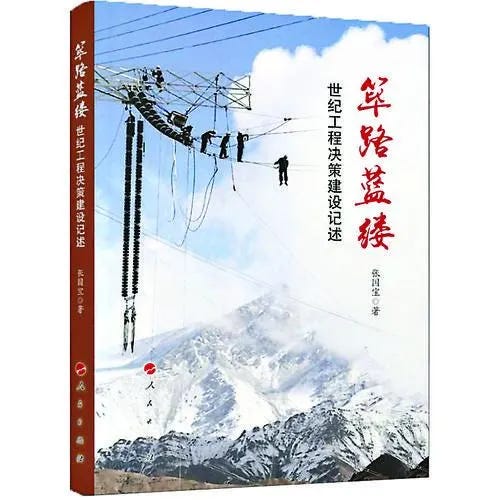
This is the third episode of my series of readings of the book Pioneering Through Hardship: An Account of the Decision-Making and Construction of Landmark Engineering Projects (筚路蓝缕:世纪工程决策建设记述), the memoirs of Zhang Guobao, former Vice Chairman of the National Development and Reform Commission (NDRC). The title comes from the Zuo Zhuan 左传, an idiom describing the act of overcoming hardship to undertake a new venture under extremely difficult conditions.
Author Zhang Guobao served as Vice Chairman of the NDRC from 2003 to 2011, holding posts as the first Director of the National Energy Administration and as head of the leading group for the West-East Gas Pipeline project. He oversaw the formulation of industrial plans and policies for shipbuilding, automobiles, steel, and a host of other key sectors. More importantly, his tenure coincided with the pivotal eight-year window in which Chinese new energy shifted from a relative fringe option to a national strategy.
Reading this article on wind power, my biggest takeaway is that it’s really answering the question of whether China’s wind power competitiveness was built on subsidies or not. Zhang’s answer is a clear no. He believes the things that really did the work were three. Scale, localization, and competition.
The first is to make the market big enough. Only when the scale is there can you use the advantages of mass manufacturing to spread the cost of each turbine component over time. This is the fundamental reason costs later came down across Chinese wind power, and across the whole clean-energy industry.
The second is localization. Zhang mentions he once dealt with American middlemen who took a 200,000-yuan kickback just for selling a single turbine. With whole units relying on imports for years, costs simply couldn’t come down. The way he pushed localization was to go to the companies himself and mobilize them, piecing the whole supply chain together bit by bit, from blades, gearboxes and bearings to generators. The government’s role was more about coordinating and matchmaking than directly throwing money around.
The third is using competition to discover price. Through concession bidding, on one hand you can bring in competition among developers, and it also helps decision-makers grasp the real cost of wind power. As for private firms’ worry that state-owned enterprises would compete viciously with low prices and then monopolize the market, Zhang solved it by removing the highest and lowest bids and running multiple rounds of revision. And the facts proved it. The wind market is just too big, no one can afford rock-bottom prices time after time, so the so-called dumping and monopoly didn’t hold up.
Zhang also speaks directly about his view on subsidies. He agrees that in an industry’s early stage, it’s necessary for the state to give a certain amount of tax and R&D support, which I think is also a kind of “crossing the river by feeling for America’s stones.” But subsidies were never the reason Chinese wind power succeeded. While in office, Zhang strongly opposed the Ministry of Finance directly subsidizing domestically made turbines, believing direct government subsidies hurt market fairness. In 2009, when the U.S. accused China of industrial subsidies and sought to launch an anti-subsidy investigation, China took the opportunity during negotiations to cancel these subsidies. The clauses once used to protect domestic industry were likewise dropped voluntarily, after the NDRC judged that Chinese firms had the ability to compete head-on with their foreign counterparts. What really made Chinese wind power grow was still putting money into research, raising the industry’s competitiveness, and in the end bringing costs down through economies of scale.
Zhang doesn’t dodge the fact that, under China’s governance system, local governments, for the sake of tax revenue, would force wind companies to build plants locally, which eventually caused overcapacity. His attitude toward this, that “in the end it still has to come back to the market,” is actually a roundabout admission that the other half of this model is letting inefficient firms go bankrupt and letting the market clear. Scale and competition bring prosperity, but they also inevitably bring a reshuffle. The two are two sides of the same coin, and you can’t have it both ways.
He also writes in detail about the delays in approving transmission lines and the arguments behind them, including whether to integrate the grid, whether to build outbound transmission corridors, and whether to go ahead with ultra-high-voltage. Everyone argued back and forth, but no one would make the call, and the result was that huge amounts of wind and hydro power couldn’t be sent out. Praise planning is easy, but it’s the willingness to talk about reality that’s convincing. The rest of the details I’ll leave to the translation below.
Honestly, while reading it, I often had a strange sense of déjà vu; the article talks about America’s “anti-dumping” case back then, but I kept thinking about Europe’s subsidy investigations into China. It’s reasonable for Europe to protect its own industries, but resorting to unilateral measures on Chinese goods does nothing, at root, to strengthen Europe’s competitiveness. By comparison, encouraging Chinese companies to invest in Europe would be a far more viable path. Yet Brussels’ approach brings to mind the satire of Yes, Prime Minister: just as British defence policy existed not to defend Britain but to make people believe it was defended, these measures exist not to protect European competitiveness, but to make people believe it is being protected. Worse still, they risk inviting Chinese retaliation that would only deepen Europe’s economic woes. And this article is itself the answer: China’s wind power succeeded not by relying on subsidies, but on scale, competition, and research. Protection might buy a moment’s breathing room, but it can’t buy real industrial competitiveness. And this holds true whether for the China of back then or the Europe of today.
Below is the full piece:
The Decision-Making Behind China’s New Energy
In ten years, China’s wind power industry leapt from an obscure sector to a position of relative global leadership. “First, make the ‘pie’ bigger; second, introduce competition; third, push for domestic manufacturing—these enabled the industry to achieve explosive growth.” But amid this explosive growth, numerous controversies also arose, such as “wind curtailment,” overcapacity, excessively high costs, the form of subsidies, and whether to pursue concentrated development or distributed development. After 2009, worries, criticisms, doubts, and even accusations about wind power’s “Great Leap Forward”–style development came in an unending stream. To sum up our experience and draw lessons, we should not shy away from the problems, and it is necessary to review the decision-making and development course of new energy over these ten years.
Three Major Policies Sparked Explosive Growth in Wind Power
The application of wind power in China can be traced back to the 1980s, but it was not until the “Eleventh Five-Year Plan” period that it ushered in explosive growth. Wind power did not appear only in recent years. Before I served as Deputy Director of the State Planning Commission, my predecessor as Deputy Director, Ye Qing—who later became Chairman of the Shenhua Group—was someone I once accompanied to the United States for an inspection visit, probably in the early 1990s. When the plane landed in California, we saw wind turbines covering the hilltops along the coast in great swaths.
New energy in China got started as early as the 1980s. In the 1990s, the predecessor of today’s National Energy Administration was the Basic Industries Department of the State Planning Commission, and within the Basic Industries Department there was a division called the Energy Conservation and Renewable Energy Division. The function of this division was to develop new energy using international loans. At that time the World Bank provided a sum of money and set up a dedicated office to promote wind and solar energy, called the World Bank Renewable Energy Loan Office. The Energy Conservation and Renewable Energy Division had also at that time selected manufacturers such as the Luoyang Tractor Factory and the Xi’an Aircraft Manufacturing Factory to produce wind power generation equipment, but none of them later amounted to much. At that time, wind power really had not developed on a large scale. In 1999, I took over as Deputy Director of the State Planning Commission, also overseeing energy. The entire country’s installed wind power capacity by 2000 was still less than 400,000 kilowatts, and this 400,000 kilowatts of equipment was basically purchased from abroad, mainly Vestas and GE equipment.
After 2003, renewable energy represented by wind power did indeed usher in explosive development, for a variety of reasons. Looking at the broader situation, worldwide the green-development concept of new energy was increasingly winning people’s hearts, and the same was true in China. The state’s emphasis on renewable energy was gradually strengthening, and public awareness was also continuously rising, which provided a very good public-opinion environment for promoting renewable energy. On the other hand, there were the state’s guidelines and policies. After I took office, I felt very puzzled: why couldn’t wind power be promoted? Later I learned that wind power was extremely expensive—the cheapest electricity price was still eight mao per kilowatt-hour, and some even reached around two yuan per kilowatt-hour; naturally, not many people were willing to use electricity that expensive.
At first I did not understand: wind resources don’t cost money to buy, so how could the cost be even higher than that of coal-fired power plants? It turned out that the main cost was in the equipment—the price per kilowatt of wind power equipment was much higher than that for thermal power, and part of the equipment investment was financed by loans. Although the wind itself costs nothing, the principal and interest repayment, equipment depreciation, and other financial expenses were the main costs, so the price of wind power was extremely expensive. Therefore, I put forward suggestions in three areas:
First, make the “pie” bigger. Since it was so expensive, we had to find ways to make it cheaper. How could it be made cheaper? By making the “pie” bigger and spreading out the cost. If there were only three to five machines and no large-scale production, the cost could not be brought down. If each manufacturer made several hundred or a thousand units, the cost would be spread thin, and enterprises would have an incentive too.
Second, push for domestic manufacturing. Why was it so expensive at first? Because we couldn’t make it ourselves. When we first did research, we encountered many middlemen. Earlier, when I went to the United States with Comrade Ye Qing, we ran into two ethnic-Chinese brothers doing this kind of business. They sold American wind turbines into China. It was said that the kickback for selling a single turbine was 200,000 yuan. This was how equipment prices were driven up. If we could solve the equipment problem ourselves through domestic manufacturing, prices would come down.
Third, introduce competition. In the past there was no competition among wind power developers. If a certain place had wind and the government wanted to build a wind farm, and a developer was willing to invest, the project would be given to him. Once it was up and running, he would go lobby the government, getting the price bureau to approve the electricity price, and some were approved at 1.5 yuan/kWh or even 2 yuan/kWh. Investors naturally hoped the price department would approve a high electricity price, because the higher the price, the more they could earn. At that time, investors and project owners were determined in this way. Later, I felt this should be changed: the government should not designate who would be the investor; those willing to invest in wind power could compete, conducting concession-rights bidding. The government would provide wind resource data to investors, and the investors would bid against one another on price, determining how much per kilowatt-hour. This created competition: there might be three to five parties all wanting to do it; one would bid six mao per kWh, another five mao five per kWh, and yet another five mao per kWh—then I could let the one who bid five mao per kWh do it.
Through these three methods, we brought down the construction cost, and the price per kilowatt-hour came down as well.
The Concession-Rights Bidding Debate
The practice of concession-rights bidding stirred up considerable debate at the time. Originally, electricity prices were all determined by the price department based on cost plus an appropriate profit. They still preferred to do it this way and did not want bidding, saying that after bidding there would be vicious competition, leaving wind power enterprises with no profit to make, which would dampen the enthusiasm of wind power investors and possibly have a bad effect. Others said that state-owned enterprises could disregard cost and maliciously drive down prices in competition, squeezing private enterprises out. This was what they considered the problem with concession-rights bidding. In addition, they raised the issue of malicious bidding: because if you bid five mao, then in order to beat you I would bid four mao—when actually four mao means a loss and can’t be done—this would dampen everyone’s enthusiasm for investing in wind power and distort the normal bidding price, and so on. At the time there were some such reasons for opposition.
Would the situations they described actually happen? Yes—sometimes bidding might indeed give rise to vicious competition. But we could do as a referee scores points: to avoid unfairness, drop the highest score and the lowest score, take a weighted average, and on the whole it could still reflect the true level. Moreover, even if someone competed viciously and deliberately took a loss, that kind of thing cannot last—once is fine, but can one keep taking losses two or three times? Some also charged that private enterprises would surely withdraw because they couldn’t afford the losses, while state-owned enterprises could compete without regard to cost. Actually this is wrong too. Don’t assume state-owned enterprises will keep operating at a loss forever. An enterprise might engage in vicious competition once, but it cannot do so every single time.
Why did the concept of concession-rights bidding come about? In the past I served as head of the leading group for the West-East Gas Pipeline construction project, and at that time we also used bidding to determine the supplier of pipeline steel. Back then we also pushed for domestic manufacturing; the domestic firms that could make it included several large steel companies such as Baosteel, Angang, and Wugang. At this point a South Korean company came in and bid lower than all the domestic firms. Many domestic steel mills came to complain, saying this was vicious competition—such low prices were dumping—but at that time there was no concept of anti-dumping yet. As the owner unit, the responsible comrade from PetroChina came to me. He said, “Director Zhang, what do you think we should do? Whom should we let win the bid?” At that time I was also in a difficult spot: the domestic steel enterprises reflected that the Koreans were competing viciously, but the owner unit’s interest was oriented toward buying from whoever was cheapest. All right then—the first time, let the Koreans win the bid. The Koreans were indeed competing viciously, dumping at below cost, but at the second bidding, that Korean bidder had no way to continue, because he had done a loss-making deal. At the second bidding, it was all Chinese enterprises that won.
Judging from this experience, I believe the logic of wind power concession-rights bidding is the same: even if someone competes viciously and bids recklessly, that situation cannot last. A similar incident also occurred during the first batch of wind power concession-rights bidding. In 2003, we held the first batch of wind power concession-rights bidding in Rudong, Jiangsu. At that time I was away on a business trip; Shi Lishan, now Deputy Director of the Renewable Energy Department, was then a division chief, and he called me and said: “Director Zhang, there’s a company called the Huarui Group, a private enterprise, and it bid only three mao eight per kilowatt-hour. Everyone who participated in the bidding thinks this is impossible to achieve. But it bid three mao eight, while everyone else bid five mao—what do we do? Whom exactly should we let win the bid?”
According to the bidding rules, since he bid the lowest he should be allowed to win, but everyone thought three mao eight was impossible. This stumped me. I could only say, just let him win the bid. I knew it was indeed false and he surely could not carry it through. It was later confirmed that he indeed could not carry it through, and construction progress remained extremely slow throughout. After this kind of thing happens once, it is very hard for it to happen a second time. Throughout this whole affair we had to keep correcting course and summing up experience; from time to time various situations would arise, but a normal enterprise cannot do loss-making business forever, and competition can still push everyone to lower costs and improve technology. I have always firmly believed that competition should be introduced, as this is somewhat more scientific than having government officials set prices arbitrarily.
To sum it up in my own words, this is called discovering the price through competitive bidding. In a given region, through several rounds of bidding and several corrections—just like dropping the highest and lowest scores—one can gradually discover a true price, at what level it is reasonable. As it now appears, it is roughly between five mao and six mao, and this price level is fairly appropriate—neither yielding windfall profits nor incurring losses.
However, the price department, which advocated government price-setting, still did not change its view and kept criticizing concession-rights bidding as no good, so later I compromised too. Now that bidding has discovered the reasonable price level, we have formed benchmark feed-in tariffs for four categories of regions—setting one benchmark tariff for regions with roughly similar wind resource conditions—so we no longer hold bidding, but set prices according to the approximate data from the previous rounds of bidding. The country is now divided into four categories of regions: 0.51 yuan, 0.52 yuan, 0.57 yuan, and 0.61 yuan. If you want to build a wind farm in a given place, you go by that region’s electricity price.
Although we have now returned to determining electricity prices according to each region’s resources, this process discovered the price through competition, and in this process it rapidly lowered the cost of wind power—from a high of 0.8 yuan or even 2 yuan, down to roughly between 0.5 yuan and 0.6 yuan now.
Some say that in this process private enterprises couldn’t make money and all withdrew. Practice has proven this is not the case. Not long ago a private enterprise even came to me, hoping I would do some work to get the Energy Administration to approve their wind power project. I also specifically asked the major wind power investors about this matter; I said, are you actually losing money or making money? Longyuan Company made 3 billion yuan last year. During the 2014 Spring Festival I also ran into He Yu, Chairman of CGN, and he said CGN was also making money in wind power, and the same was true of Hebei Construction & Investment. So it is not the way some people imagine—that state-owned enterprises compete viciously without regard to cost; if no one were making money, they could not survive forever.
Domestic Manufacturing Drove the Growth of a Group of Enterprises
In those years, several academicians working in aerodynamics, in the process of promoting domestic manufacturing, used their technology and expertise to establish AVIC Huiteng Wind Power Equipment Co., Ltd. in Baoding, going into business themselves to make wind turbine blades. There was also a new-materials company, spun off from the Building Materials Bureau, which used its strength in making fiberglass to produce fiberglass blades in Lianyungang, Jiangsu. No one had been able to make wind turbine gearboxes either, because the technology was very complex; only the Chongqing Gear Factory produced some, drawing on the capability it had formed making marine gearboxes. I thought of the Dalian Heavy Machinery Factory and the Nanjing High-Speed Gearbox Factory, and I suppose it was I who egged them on. I said wind power was about to enter a very good period, and if they got involved, they would find this was a very good market. I did some promoting to them, but in the end they themselves made up their minds to do it. At first they were rather conservative, saying they’d make a thousand units. I said a thousand is too few—make at least two or three thousand. The Nanjing High-Speed Gearbox Factory had been restructured into a joint-stock company; in the late period of the “Cultural Revolution” it had worked on the project to transmit Sichuan gas out of Sichuan. Sichuan’s abundant natural gas could be exported for gas-fired power generation, so a gearbox factory was set up. This gearbox factory made gearboxes for gas turbines, but later there weren’t many orders, so it switched to making cement and marine gearboxes, and still later it made wind power gearboxes. When I went to inspect that factory, I said to its leaders that if they got into wind power now, they’d have at least five to ten years’ worth of work to live on. Later they did it.
Once gearboxes were available, bearings still couldn’t be made and were all imported. At that time I was presiding over the revitalization of the Northeast, and there was the Wafangdian Bearing Factory locally. This was an old state-owned enterprise that originally made ordinary bearings, but now it needed new products to compete with private enterprises. I said what private enterprises can’t make at present is the large slewing bearings for wind turbines, so they too began to make them. There was also the Jiamusi Electric Machinery Factory, which had previously made explosion-proof motors, and I introduced them to making wind power generators.
Although to this day some components still cannot be domestically manufactured, the process of an industry going from being completely unable to manufacture domestically to manufacturing a considerable portion domestically not only built up the entire supporting supply chain but also drove the growth of a large group of enterprises.
Subsidies Are Not the Fundamental Solution
In the early stages of renewable energy development, quite a few countries provide subsidies to the industry, and quite a few people called on our government to provide subsidies. But I believe subsidies are not the fundamental solution to the problem. So among the policies I mentioned, I did not particularly emphasize providing subsidies.
One substantive subsidy was when we obtained some money from the Ministry of Finance at the time, about 80 million yuan, all of which was given to the Meteorological Administration to measure wind and provide nationwide meteorological data. Another item was support for research and development including wind power. At that time I asked the Ministry of Finance for some money, 200 million yuan in total, but not all for wind power—rather, it was used to build key energy laboratories, including the national wind power laboratory and the offshore wind power laboratory. This 200 million yuan was used for laboratory research facilities, and that counts as a subsidy too.
There is one more point, which is the electricity-price subsidy still in effect now. Now wind power is at minimum five mao and at most six mao one, roughly within this range. If the thermal power on-grid price is four mao five and wind power is five mao five, a difference of one mao, that price-difference portion is subsidized by the state through the renewable energy fund. Where does the renewable energy fund come from? A levy of eight li per kilowatt-hour. People nationwide pay eight li per kilowatt-hour. Some don’t pay—for instance, captive power plants and rural small hydropower don’t pay. All the remaining large power plants pay eight li per kilowatt-hour, which can collect 20 billion yuan a year to subsidize renewable energy. But I still have some worries about this subsidy method: if the scale gets larger in the future, more subsidy will be needed, and eight li won’t be enough.
It can be said that during the growth of the wind power industry, the state’s substantive financial subsidies were actually not much; it was mainly through the industry’s development prospects and policy guidance that the industry was driven forward.
New energy is a new concept, a good concept; not only were we at the Energy Administration and the NDRC willing to give support to wind power, but the Ministry of Finance and the Ministry of Science and Technology were also willing to make some contributions. The Ministry of Finance once issued a policy: for the first 50 domestically manufactured wind turbines of 1.5 MW and above, a subsidy of 600 yuan per kilowatt. The Ministry of Finance once sought my opinion on this matter. At the time I disagreed. I said this kind of subsidy is somewhat unfair—some get the subsidy, some don’t—and it would be better to use it to support wind power R&D. But the Ministry of Finance carried out the policy anyway, giving 600 yuan per kilowatt for the first 50 turbines, for a cumulative subsidy of 200 million yuan. Later this matter was seized upon by the Americans, who accused the Chinese government of providing subsidies and conducted an investigation against us similar to “double anti-dumping/anti-subsidy.” When I learned of this, I proposed holding a video dialogue with the Americans for everyone to discuss. Because the United States subsidizes new energy far more than we do—you can look up on websites the new energy subsidy policies issued by each state, which are simply as numerous as the hairs on an ox—they had no grounds to turn around and accuse us. The Americans agreed, but they did not allow the media to participate; it could only be official-to-official dialogue, and the participating departments were the U.S. Department of Energy, the Department of Commerce, and others. The U.S. Department of Energy was actually worried about coming into conflict with us, and repeatedly explained to us that this was done by the Department of Commerce and that the Department of Energy was just a foil. On our side, the lead was me; at the time I was Director of the National Energy Administration and the Deputy Director of the NDRC in charge of energy.
I also deliberately put them on the spot a bit by saying I wanted to bring in the media. I said, don’t you Americans advocate transparency? But when it really comes to being transparent, you get scared—to put it in a Chinese idiom, it’s like Lord Ye loving dragons [professing to love something one actually fears]. Their reasoning was that having the media present might make the problem harder to resolve and would only keep hyping the matter. At the start of the dialogue the American side asked, I’d now like to ask our Chinese friends to confirm—on your side there’s no media, right? I said I could confirm there was no media. In the dialogue I listed out the various American subsidies, and after going back and forth, the Americans had no truly tenable evidence, and in the end they latched onto the one item—the Ministry of Finance’s subsidy at the time of 600 yuan per kilowatt for the first 50 domestically manufactured wind turbines of 1.5 MW and above. Later the China-U.S. Joint Commission on Commerce and Trade was held in Hangzhou, led by Comrade Wang Qishan; the U.S. side was led by the current Ambassador to China, Gary Locke, who at the time was Secretary of Commerce. We assessed in advance that he would surely raise this issue of wind power subsidies.
Later I suggested to Comrade Wang Qishan that if he raised this matter, we should take the initiative to say we’d cancel this subsidy. After communicating with the various departments participating in the Joint Commission, the Ministry of Finance also agreed with our view. At the Hangzhou meeting, sure enough, Gary Locke raised this issue. Comrade Wang Qishan then said, all right, we’ll cancel it on our own initiative. Locke then had nothing more to say and could only say we are very pleased that this meeting was so productive. Later the U.S. “double anti-dumping/anti-subsidy” investigation against China’s wind power never got off the ground.
In the early development stage of an industry, the state should provide support, but such support is best placed in R&D or taxation. In fact the United States is the same: they place their support policy for wind power in taxation—not taxing or taxing less, using tax incentives as a form of subsidy rather than directly giving funds. If you directly give financial subsidies, then the larger the future development scale, the larger the subsidy scale, and at a certain point the public finances cannot bear it. So I advocate that the wind power industry should still take the development path of enhancing competitiveness, raising R&D levels, and lowering costs. There is one more point, which is to make the “pie” bigger; relying entirely on state subsidies cannot last—this has always been my philosophy.
On this development philosophy of mine, the various stakeholders did not hold uniform views. The price-control department did not agree with the bidding approach; they believed it was still best for the government to determine a price through cost plus appropriate profit. I disagreed. I was Deputy Director of the NDRC; I did not directly oversee prices, but I was also their leader, and it was awkward for them to openly defy me, so they still agreed—but in fact they always held reservations. After I was no longer in charge, they reverted to setting by region and no longer competed.
This view of mine encountered fairly large resistance in the course of implementation, and there were some critical junctures that made me feel rather strained in carrying it forward. At the time some interest groups voiced their feelings through the media, saying this approach of mine was unscientific. As mentioned before, some held that bidding might cause vicious competition, that state-owned enterprises disregarded cost, that private enterprises had no way to get in and no money to earn, and that in the future no one would be willing to invest in wind power—there was a great deal of such public opinion. But the facts proved otherwise: in these very years wind power achieved great development. This confirms that practice is the sole criterion for testing truth, rather than relying solely on what certain people imagine in their heads.
We originally had another policy: in order to encourage domestic manufacturing, there was a scoring condition in the bidding—a localization rate of 75%; if you reached 75% you could earn extra points, and if you didn’t reach 75% it wouldn’t do. The Americans also latched onto this against us. Later, since we already had three to five years of practical experience, we judged that even if this condition were removed, Chinese enterprises should have the ability to compete on the same stage as their foreign counterparts, and the state cannot adopt protective policies forever. So after the China-U.S. Joint Commission on Commerce and Trade in Hangzhou, we canceled this condition, and the handle the Americans held was gone.
There had also previously been a stipulation on operating qualifications: at the time of bidding, enterprises were required to have an operating track record of more than 100 turbines within China; later we also recognized bidders’ operating track records abroad. The United States later also used this clause to constrain us, saying that for China’s wind power equipment to be exported to the United States, Chinese companies would be required to have an operating track record of more than 100 turbines on U.S. soil. I then said, back then you used this very issue to accuse us, and now that we’ve canceled it, you instead start using this clause. We demanded that the United States should recognize manufacturers’ track records achieved elsewhere in the world, not only allow it if they had such a track record on U.S. soil. So there are all kinds of games being played in here.
In the End, We Must Return to the Market
Looking at the course of new energy development to date, the rise of both wind power and photovoltaics has been closely tied to local development. The relationship between the new energy industry and local governments over these years is also an issue in renewable energy development. Originally, local governments were quite enthusiastic about developing new energy, because many wind power locations were often barren land where not a blade of grass grows, with no income per unit of land area, but developing wind power could bring in some tax revenue and yield some returns, so local governments were supportive. Later the Ministry of Finance introduced a policy called equipment deduction; the starting point was good—to encourage everyone to invest in wind power, the money spent buying equipment to invest in wind power could be deducted from future taxes payable. This measure sounds at first like support for wind power development, and as a wind power investor one would certainly be glad, since it lightened the tax burden. But local governments’ tax-revenue interests were affected—they had no tax revenue for many years. Having lost the tax revenue, local governments began to ponder a question: why should I invite you to come and do this? What benefit can I get? Now I get no benefit, and the tax revenue is gone too. What is a local government to do? It could only force enterprises to build factories locally. For example, a certain city might have wind resources and be able to build a wind farm, but the government would require that wind turbines produced in that city must be used, thus forcing these turbine manufacturers all to build factories locally. The underlying cause behind many problems between renewable energy projects and local governments is taxation.
Regarding the relationship between renewable energy enterprises and local governments, one can look at today’s photovoltaic industry. Companies like LDK and Suntech were once leaders in the solar industry; in fact, neither the NDRC nor the National Energy Administration gave these enterprises many real benefits. When I was Director of the National Energy Administration, the national finances gave them no subsidy. But local governments believed these companies provided a relatively large boost to the local economy, so it was inevitable that they would offer all sorts of incentive policies. Most of these former leaders grew up amid the great tide of the market economy; they enjoyed the preferential conditions provided by local governments, and now, due to overcapacity and the squeeze on us from foreign-market protectionism, they are going through a very difficult period.
From this I also came to realize a principle: the development of an industry and of enterprises must rely more on market forces. In the startup phase, it is also wrong for the government to give no policy at all and no encouragement, but in the end one must return to the market and enhance one’s own competitiveness—only then can one maintain vigorous vitality over the long term.
Under the current development situation, the existing subsidy mechanism, or more broadly the entire support policy, has also reached a point where it needs further improvement. Enterprises often, on the one hand, oppose the planned economy, and on the other hand, hope the government will give more subsidies. In the long run, giving them subsidies is like giving them medicine—once the medicine stops, they have no resistance. I do not advocate giving subsidies long-term; rather, I advocate that the government make the “pie” bigger. Making the “pie” bigger may be more effective than giving subsidies, and the real financial subsidy should be applied to R&D.
The same goes for the renewable energy fund: once the scale gets large in the future, it surely won’t be able to subsidize so much, and by then even levying one fen per kilowatt-hour might not be enough. The most fundamental way out is still to bring down costs through market competition and technological progress, down to a level comparable with fossil energy—this future should be foreseeable. The problem now is that adopting an arbitrary price-setting method has shackled the motivation to keep lowering costs. Once you’ve set it at six mao one per kilowatt-hour, it’s indeed convenient and enterprises have profit to make, but then there is no incentive to pursue lower costs. I think we should still have competitive bidding, so that enterprises have the incentive to further research new technologies.
The Key Crux: Lagging Approval of Transmission Lines
In the years since the Renewable Energy Law was implemented, it has frequently run into the embarrassment of being unable to be effectively enforced. Some hold that the clause on “full guaranteed purchase of renewable energy” should be adjusted in light of actual conditions. When the Renewable Energy Law was being drafted, it happened to be when I was in charge of the Energy Administration, and the approving body was the National People’s Congress. During this process, I led teams to report to the NPC many times. The NPC delegates not only listened to my introduction of the Renewable Energy Law but also engaged legal experts to continuously refine the draft of the Renewable Energy Law.
That clause on “full guaranteed purchase of renewable energy” exists in other countries too. Compared with conventional energy, renewable energy is still weak and small, and such a protective policy is highly necessary. Our current proportion of new energy is only one-point-something percent, less than 2%; we are capable of purchasing this small amount of electricity, and I believe there should be no controversy over this. Of China’s 4.95 trillion kilowatt-hours of electricity in 2013, wind power was only 100.4 billion kilowatt-hours, accounting for just 2%.
Full purchase should not have been a problem, so why has it now become a big problem? It’s because of “wind curtailment.” According to data from relevant parties, “wind curtailment” in 2013 was about 20 billion kilowatt-hours, mainly in the Northeast region and Inner Mongolia. The causes of “wind curtailment” include both objective and subjective reasons.
The objective reason is that wind power development in these places is relatively concentrated; although it is not much for the country as a whole, in local areas it might be as high as 20%–30%. In winter the contradiction becomes even more acute, because winter is precisely when the wind is stronger and more wind power can be generated. But at this time heating must be supplied; in northern regions the heat-supply units must first be guaranteed to operate, and if wind and thermal power generation come into conflict and the electricity can’t be consumed, wind power must be shut down to give priority to the heat-supply units. The dispatch order puts heat-supply units in first place, and wind power must give way, so “wind curtailment” arises. But if the whole country could be interconnected and the electricity could be sent out, this problem would no longer exist.
In winter, the people of Inner Mongolia need heating, so the heat-supply units generate, and at the same time wind power can also generate, with the electricity sent to Jiangsu through transmission and transformation lines—then this problem would be solved. But the problem now is that the transmission and transformation lines don’t exist; it can’t be sent out, so on whose head should the blame fall?
On the surface, everyone blames the grid company—you didn’t build the grid. But the grid company doesn’t agree, saying the responsibility lies with the National Energy Administration for being slow to approve the grid plan; without approval, how can it be built? Why no approval? It still comes down to the dispute over ultra-high-voltage (UHV): some favor UHV, some don’t. There are also those who oppose connecting to the East China Grid, saying that if you send it to East China you’d turn the North China Grid and the East China Grid into a synchronous grid; they only agreed to send it to Shandong, which would still be within the North China Grid. But the grid company insisted on sending it all the way to East China, and the dispute went on endlessly with no one to make the call. No one could make the call, and it could only be argued over endlessly. Having disputes is quite normal—which major Chinese project has not had disputes? Didn’t the Three Gorges have disputes? High-speed rail had disputes too, and is still being disputed even now. But should the dispute go on for a long time, endlessly? The transmission and transformation line from Xilinhot to Nanjing still has not been decided to this day. Next, it won’t just be 20 billion kWh of wind power curtailed—there is an even more astonishing figure: in 2014 the Xiluodu and Xiangjiaba hydropower stations will also curtail 20 billion kWh of hydropower. They began generating in 2014, but the transmission and transformation lines have not yet been completed and will lag by one to one and a half years. The main problem with the lag in transmission and transformation line construction is the lag in approval. Half of the five years has already passed, and the most important grid “Twelfth Five-Year Plan” still has not been approved. Why not approved? Because of the constant arguing there. This endless arguing has caused enormous losses to the country. On the one hand we worry about smog weather, while on the other hand we have to give up 40 billion kWh of clean energy. The 100.4 billion kWh is wind power, while the country’s total generation is 4.95 trillion kWh, so wind power’s share is only 2%; therefore consuming this small amount of wind power on a nationwide basis is no problem, but it cannot be consumed in local areas. If there were transmission and transformation lines to send it out, sent to the load centers, this bit of electricity would be no problem at all.
This term of government surely won’t have time to approve it. Whether the next term of government, once it comes in, can approve it immediately, or will wait until the leaders are familiar with it before approving—that’s unknown. But the losses already caused are irreversible. In 2013, clean energy will have to curtail 40 billion kWh—20 billion kWh of wind power plus 20 billion kWh of hydropower. The hydropower is mainly from the Jinsha River, the two lines of Xiluodu and Xiangjiaba, whose completion will be postponed by a year and a half, and some still say don’t make a fuss about this figure. In fact, the situation this year is extremely grave.
So the guaranteed-purchase protective clause for full purchase is not the problem; the problem is that the lag in approval causes renewable energy generation to be unable to be sent to where it is needed. The most fundamental purpose of the Renewable Energy Law is to encourage renewable energy, to create a legal environment for the vigorous development of renewable energy, and to elevate the development of this industry to the legal level for protection. Full purchase is precisely a rigid protective measure that should be strictly observed, but the reality is that we have no way to strictly observe it—not because it can’t be done, but because much of the work has not been done.
When drafting the Renewable Energy Law at the time, we also drew on existing renewable energy policies of countries around the world, among which “full purchase” was also a policy followed in promoting renewable energy in other countries. It is worth noting that the United States has another policy: it stipulates that energy companies have an obligation to develop at least a certain percentage of renewable energy. For example, thermal power enterprises, which in the past burned coal entirely, now have an obligation to add at least 3%–5% new energy.
When the Renewable Energy Law was first formulated, we drew on this clause, and it too was mandatory, requiring power enterprises to have at least an obligation to develop 3%–5% renewable energy. But this clause was later objected to by the legal experts engaged by the NPC when we reported to the NPC; they said that if needed, you could issue an administrative order document to stipulate it, but not write it into the law, so it was removed. At the time it was I who went to the scene to argue the case, but the legal experts simply would not agree, and later no such provision was issued in administrative documents either. So we now have no such mandatory requirement that power enterprises must develop a certain percentage of new energy, and to this day I still feel this is quite a pity.
More to read:
The 15-Year Negotiation Behind the China-Russia First Crude Oil Pipeline

I've recently been reading Pioneering Through Hardship: An Account of the Decision-Making and Construction of Landmark Engineering Projects (筚路蓝缕:世纪工程决策建设记述), the memoirs of Zhang Guobao, former Vice Chairman of the National Development and Reform Commission (NDRC). The title comes from the
How China Built Its Strategic Petroleum Reserve from Scratch

From May 25 to 27, Chinese Premier Li Qiang conducted an inspection tour in Zhoushan and Ningbo, Zhejiang Province, paying dedicated visits to the Zhoushan National Petroleum Reserve Base, the Bulk Agricultural Commodities Storage and Transport Base, and the Ningbo Daxie Commercial Petroleum Reserve Project. Together these cover all three categories of …
