

I've recently been reading Pioneering Through Hardship: An Account of the Decision-Making and Construction of Landmark Engineering Projects (筚路蓝缕:世纪工程决策建设记述), the memoirs of Zhang Guobao, former Vice Chairman of the National Development and Reform Commission (NDRC). The title comes from the Zuo Zhuan 左传, an idiom describing the act of overcoming hardship to undertake a new venture under extremely difficult conditions.
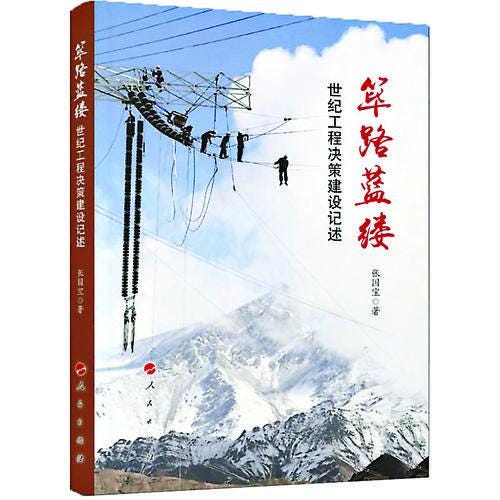
I’m probably the first one to introduce this book to the English-speaking community. What makes this memoir unusual is that it mentions the thinking and bargaining details behind major policy decisions: from the initial vetting of proposals, to disagreements between ministries, to balancing local demands against central objectives, and finally to the top leadership’s call. In recounting the deliberations behind the West-East Gas Pipeline, he lays out in detail how the route, gas sources, and natural gas pricing mechanism were determined. Discussing the development of Chinese wind power, he does not shy away from the large-scale “wind curtailment”(弃风) that resulted from inadequate transmission line buildout during the buildout phase. He also writes in detail about the negotiations over the China-Russia crude oil pipeline, including his complaints about the Russian negotiating style and how the two sides maneuvered against each other. In my view, for anyone trying to understand the logic and considerations behind Chinese government decision-making, this book has an irreplaceable value.
Zhang served as Vice Chairman of the NDRC from 2003 to 2011, holding posts as the first Director of the National Energy Administration and as head of the leading group for the West-East Gas Pipeline project. He oversaw the formulation of industrial plans and policies for shipbuilding, automobiles, steel, and a host of other key sectors. More importantly, his tenure coincided with the pivotal eight-year window in which Chinese new energy shifted from a relative fringe option to a national strategy.
During his time in office, the Renewable Energy Law was enacted in 2005, providing policy support for wind and solar; installed wind capacity leapt from under 600 MW in 2003 to over 60 GW in 2011, making China the world’s largest wind power market virtually overnight. Gigawatt-scale wind bases in Jiuquan (Gansu), Inner Mongolia, Hebei, and elsewhere broke ground in succession. The solar PV industry also gradually pivoted from export dependence toward the domestic market. At the same time, a slate of projects that define today’s energy landscape—ultra-high voltage transmission, third-generation nuclear power (including the introduction of the AP1000), and large hydropower projects such as Xiluodu溪洛渡 and Xiangjiaba向家坝 were also given the green light during this period. Because of the singular depth of this experience, I'm planning to spend some time, through a series of newsletters, sharing pieces of his memoirs.
It is worth noting that this book is considered essential reading within China's Industrial Party (工业党) circles, a tech-savvy online group that argues that engineering and scientific capability are the primary drivers of national power. If Illumine Lingao临高启明 represents the cultural archetype of this current of thought, then Zhang Guobao's memoirs is a rare top-down perspective; it's a real-world affirmation of how the Industrial Party ethos manifests at the level of national governance.
I chose "A Fifteen-Year Negotiation: The China-Russia Crude Oil Pipeline" as the opening piece of this newsletter series. Published in 2018, the article is Zhang’s detailed recollection of the 15-year history of pipeline negotiations stretching back to the 1990s. It's a window into how geopolitics, diplomatic relations, and commercial bargaining shaped the cross-border infrastructure decision. He also shares many rarely-seen negotiating details, like dozens of hours of continuous talks with the Russian Deputy Energy Minister, only to share cigarettes afterward and joke about U.S. Energy Secretary Bodman. A last-minute change of stance from the Russian side just before signing, leaving the Chinese and Russian Vice Premiers waiting at the Great Hall of the People for three hours while their teams hashed things out on the spot. After the talks finally concluded, Zhang even wrote a classical-style poem to commemorate the grueling experience. I believe these are the kinds of details that no official readout could ever convey.
A Fifteen-Year Negotiation: The Inside Story of the China-Russia Crude Oil Pipeline
Why Build the China-Russia Crude Oil Pipeline?
China was once an oil-poor country. The gasoline, kerosene, and diesel it used almost entirely depended on imports—hence the term “foreign oil.” In the late 1950s and early 1960s, the Daqing Oilfield was discovered and developed, and in 1963 China achieved oil self-sufficiency, with some surplus exported for foreign exchange. But as the economy grew and living standards rose, demand surged. Self-sufficiency lasted only 30 years: by 1993, imports exceeded exports and China once again became a net crude oil importer—a trend that has grown year after year. By 2016, China imported 380 million tons of crude while producing 200 million tons domestically, putting external dependency above 60%.
In the 1990s, extraction at Daqing gradually shifted from natural flow and pumping to water injection, with water injection accounting for an ever-larger share. Tertiary recovery techniques were later developed, using chemical agents with detergent-like properties to wash oil out of rock fissures. The petroleum sector recognized that Daqing was moving past its peak into decline. Yet Daqing had become the main crude source for China’s major refineries: its oil flowed through pipelines to refineries in Jilin, Liaoning, and other areas. As Daqing output fell, those refineries faced supply problems. So from the 1990s onward, the petroleum sector began contacting the Russian side, exploring a pipeline from Siberian oilfields to Daqing to compensate for Daqing’s declining output.
Yukos: The Initial Private-Sector Partner
The original idea was to build a pipeline from Russia’s Sakha and Chayanda fields to Daqing, but negotiations with Russia were extremely difficult and made no substantive progress.
In 1994, CNPC made contact with Yukos, a private Russian oil company. Yukos was more enthusiastic than Russia’s state oil company about cooperating with CNPC on a China-Russia oil pipeline. After the Soviet collapse, many private enterprises emerged; one of the larger ones was Yukos. Its chairman, Mikhail Khodorkovsky, had been a Komsomol secretary in the Soviet era. After the USSR’s dissolution, he went into business and founded both a company and a bank; affiliated entities acquired Yukos shares during the privatization wave and gradually came to hold 90% of Yukos. The company was a joint-stock firm whose raised capital included shares held by American citizens.
Yukos proposed the “Anda Line”(安大线)—a pipeline from Russia’s Angarsk oilfield to Daqing. It would start at Angarsk in Irkutsk Oblast, head south into the Republic of Buryatia, skirt Lake Baikal, run east through Chita Oblast, enter China, and reach Daqing. This fit CNPC’s thinking, and so Yukos remained the principal negotiating counterpart.
In 1996, the two sides completed a pre-feasibility study for the Anda Line. But by 1999, when I took office as Vice Chairman of the State Development Planning Commission, no result had been reached. In September 2001, CNPC, Yukos, and Russia’s Transneft pipeline company signed a general agreement to conduct a feasibility study on the Anda Line—but the Russian government’s views seemed inconsistent with Yukos’s, and no substantive progress was made.
Zhu Rongji’s Idea: Trade $1.4 Billion in Cash for the Tianwan Nuclear Plant in Exchange for Russian Approval of the Pipeline
After I assumed my deputy-director post and took charge of energy and raw materials, I began participating directly in negotiations on Russian crude imports and pipeline construction. On one occasion, then-CNPC General Manager Ma Fucai马富才 returned from Russia and reported to Premier Zhu Rongji that the Russian side had offered the following: if the $1.4 billion in barter funds that Russia was using to supply equipment to China’s Tianwan Nuclear Power Plant in Lianyungang, Jiangsu could instead be paid in cash, Russia would agree to build the China-Russia crude oil pipeline.
The Tianwan plant was being built with Russian technology and equipment. At the time, post-Soviet Russia faced economic hardship and was eager to export major equipment such as nuclear technology. It struck a barter arrangement with China National Nuclear Corporation: China would not pay cash for the equipment; Russia would provide a $1.4 billion supplier credit, which China would repay with textiles, light industrial goods, household appliances, and other exports. The terms were attractive to China. By the late 1990s, under Premier Zhu, China’s foreign exchange reserves had improved dramatically, and paying $1.4 billion in cash was no longer a concern.
After hearing Ma Fucai’s report, Premier Zhu decided to accept the Russian terms—paying the $1.4 billion in cash instead of barter—in exchange for Russian agreement to build the pipeline, and dispatched me to lead a delegation to Russia to follow through. I went to Russia, stayed at our embassy in Moscow, and held discreet talks with various Russian ministries. A female director-general from Russia’s Finance Ministry accompanied us. I visited the Ministry of Economic Development, the Finance Ministry, and other departments, but I sensed the Russians did not share Ma Fucai’s message: on whether Chinese cash payment for Tianwan would buy Russian agreement to the pipeline, they were noncommittal—evasive and equivocating. The visit yielded no progress, and the matter fizzled out. My guess was that Ma Fucai had gotten his information from Yukos—perhaps it had been Yukos’s idea.
“Anda Line” vs. “Anna Line”: Japan Stirs the Pot
Opposition to the Anda Line then grew louder within Russia. The main objection was that the route passed near the southern end of Lake Baikal, the world’s largest freshwater lake, said to hold one-seventh of Earth’s terrestrial freshwater and a critically important Russian nature reserve. Critics feared a pipeline accident could pollute Baikal. Another objection was that Russia should maximize its national interest: the Anda Line would only deliver oil to China, while routes oriented toward Japan, South Korea, and other Asian markets deserved consideration.
The “Anna Line” then emerged. It was reportedly proposed by Japan. The route would run from Angarsk along the Baikal-Amur Mainline railway and the Sino-Russian border region to Nakhodka, Russia’s Far Eastern port. Unlike the Anda Line, the Anna Line stayed entirely within Russian territory, allowing Russia to export oil to other East Asian countries via the Pacific port of Nakhodka.
Japan, also a major oil importer, sought import diversification to reduce its dependence on Middle Eastern crude and was uncomfortable with the idea of Russia building a pipeline only to Daqing. From late 2002, Japan began actively lobbying Russia for the Anna Line. In the first half of 2003, then–Prime Minister Junichiro Koizumi met Putin twice specifically to discuss energy cooperation. In June, Japanese Foreign Minister Yoriko Kawaguchi and former Prime Minister Yoshiro Mori visited the Russian Far East and pledged $7.5 billion in loans for Siberian oilfield development and pipeline construction—conditional on the Anna Line being built. Japan also hoped energy cooperation with Russia would expand Japanese influence in the Far East and weaken the China-Russia strategic partnership. Bluntly put, Tokyo wanted to torpedo the Anda Line.
Owing to Japanese involvement, Russia reopened internal debate over the pipeline’s route. China and Japan engaged in a quiet tug-of-war over which route the Russian Far East pipeline would take.
Putin Finally Decides on the “Taina Line”—But Suspense Remains
In 2003, China’s government changed, with Hu Jintao becoming President. In May 2003, while SARS raged in China, Hu made his first overseas trip as head of state, attending the 300th anniversary celebration of St. Petersburg and the third SCO summit. I accompanied him. During the visit, Hu personally worked on Putin. The SCO Moscow Declaration was issued, the China-Russia strategic partnership was further consolidated, and the visit gave strong impetus to Russia’s decision to build the pipeline.
After more than two years of debate, on December 31, 2004, Putin personally decided to build the East Siberia-Pacific Ocean (ESPO) pipeline—the “Taina Line.” It moved the original Anda route more than 400 kilometers north, well away from Lake Baikal, resolving the long-running domestic environmental dispute. The Taina Line begins at Taishet in Irkutsk Oblast, runs more than 400 km north of Lake Baikal, follows the Baikal-Amur Mainline, runs along the Sino-Russian border from Skovorodino, and ends at the Pacific port of Nakhodka.
The Taina Line was to be built in two phases. Phase one would lay the Taishet-Skovorodino segment with a designed annual throughput of 30 million tons, while large oil storage facilities were to be built at Nakhodka. Skovorodino sits across the Heilongjiang River from Mohe in China’s Heilongjiang Province. The pipeline would cross the river at Tenda on the Russian side, after which China would build a pipeline from Mohe to Daqing. Phase two would lay the Skovorodino-Nakhodka segment with annual capacity of 50 million tons and expand the Taishet-Skovorodino capacity to 80 million tons.
The Russian federal government issued Order No. 1731, and on April 26, 2005, the Russian Ministry of Industry and Energy issued Order No. 91 approving construction of the Taina Line.
The decision came against a backdrop of strengthened mutual trust within the China-Russia strategic partnership. Russia recognized China’s strong desire for the pipeline; indeed, the pipeline had become a test of the strategic partnership and bilateral trust. It also reflected Russia’s domestic politics, economics, and social dynamics, its energy diplomacy and pursuit of national interest, and its broader posture on exporting oil to East Asia. But Russia had not yet committed to a branch line into China to Daqing. Some Russians even said: “If China wants oil, it can just import it from Nakhodka!” Building the pipeline was only the first step of a long march; tough negotiations and bargaining still lay ahead.
President Hu Jintao Points to Russia’s “Internal Cause” for the Stalled Talks
Looking back, Russia’s prolonged indecision had much to do with CNPC’s initial choice of Yukos. Khodorkovsky had been a Komsomol secretary who had “jumped into the sea” of business during privatization. He was politically at odds with the authorities and had political ambitions. In 2004, the Russian government began investigating Yukos for tax evasion, and Khodorkovsky was imprisoned.
When Hu Jintao visited Russia, he summoned Ma Fucai and me to his presidential suite to report on the pipeline negotiations. Hu and his wife Liu Yongqing were having dinner, and he gave me a piece of roasted sweet potato—I held it in my hand but didn’t dare eat. Ma emphasized that Japan’s interference was the main reason talks were stalled. I remember Hu’s response: “Don’t only look for causes externally—look for causes inside Russia too.” We didn’t fully grasp this at the time. The next day, Ma and Khodorkovsky still held a joint press conference, but only a deputy foreign minister attended on behalf of the Russian government—a clear signal of official coolness.
Ma Kai马凯 and You Quan尤权 Push Through the $6 Billion “Loans-for-Oil” Plan, Securing China’s Priority for the Branch Line
After the tax-evasion arrest of Khodorkovsky, Russia publicly auctioned 76.79% of Yugansk Oil & Gas, a Yukos subsidiary, on December 19, 2004, to settle Yukos’s tax claims. Baikal Finance Group won with a bid equivalent to roughly $9.3 billion in rubles. Rosneft then acquired all of Baikal Finance Group, becoming owner of the 76.79% stake in Yugansk. Yukos’s American shareholders sued the Russian government in the United States for expropriation. To raise funds, Rosneft proposed a “loans-for-oil” arrangement to China: it would borrow $6 billion, repaying through oil sales.
No Chinese bank had ever made such a large one-time loan to a foreign enterprise. Moreover, after the Soviet collapse, China’s public sentiment was generally pessimistic about the Russian economy and skeptical about Russian creditworthiness. A one-time $6 billion loan to Rosneft was hard to support in China’s financial circles.
Then-NDRC Chairman Ma Kai convened a coordination meeting. Only Ma Kai and I clearly favored extending the loan. We argued that China needed Russian oil, that imports from Russia were rising annually, and that if the loan was linked to Chinese oil purchases, the risk would be manageable. This was a chance to expand energy cooperation with Russia and break the pipeline deadlock. The China Development Bank, then headed by Chen Yuan, had long held to lending principles aligned with national industrial policy. Chen advanced a “development finance” approach, and CDB indicated it was willing to be the lead bank for the loan if the State Council so decided.
The NDRC reported the coordination outcome and our recommendation to the State Council, where it received leadership support. Then-Deputy Secretary-General of the State Council You Quan played an active coordinating role, persuading various departments to agree to extend $6 billion to Rosneft, linked to Chinese oil purchases. Commercial negotiations were left to CNPC, CDB, and their Russian counterparts.
On January 8, 2005, CNPC and Rosneft signed a long-term trade contract for importing 48.4 million tons of Russian crude. Under it, Russia would supply 48.4 million tons of oil by rail to China between 2005 and 2010, receiving the $6 billion loan from China and repaying it from oil sales proceeds. CDB agreed on commercial terms—the LIBOR rate plus 300 basis points, a not-low rate following fully commercial principles, with a six-year term. A dedicated bank account was established: Chinese payments for Russian oil went into the account, and CDB was repaid principal and interest from it on schedule. CNPC’s purchase price followed international benchmarks—Brent, WTI, Dubai—via a formula. During implementation, as LIBOR rose, adding 300 bps exceeded then-prevailing commercial loan rates, and at Russia’s request CDB reduced the spread to around LIBOR plus 200-plus basis points, roughly in line with commercial loans. Media speculation about the oil prices and loan rates was simply inaccurate. By 2011, Russia had repaid the entire $6 billion principal and interest, and China had bought 48.4 million tons of oil—a true win-win. CDB used this loan as a launchpad for its international finance business, which later became a major line.
Subsequently, Rosneft sought to go public and looked for strategic partners. CNPC and Sinopec had done the same when they listed—BP and Shell became strategic investors holding 10% stakes, only to sell when share prices rose. They reportedly profited roughly the equivalent of all their prior investment in China. CNPC and Sinopec were furious, calling this “unfriendly,” but the response was that this was normal commercial behavior. Rosneft turned first to CNPC for strategic investment. Ma Kai and I argued China should seize the chance to acquire a larger stake in Rosneft—something we had long pursued. But CNPC took a more commercially conservative view, judging the share price too high. Later, CNPC Vice President Zhou Jiping reported to Ma Kai and me that they had bought $500 million of Rosneft shares as a strategic investor, and that Rosneft was grateful. I was displeased and told CNPC right in front of Ma Kai: India bought $1 billion—we ought to be Rosneft’s strategic partner, and we had long wanted upstream Russian oil assets, so wasn’t this the moment? Why did we buy less than India? CNPC’s explanation was that the share price was overvalued. But after Rosneft’s IPO, with oil prices high, the stock rose. As the saying goes, “man proposes, but heaven disposes.”人算不如天算
There was also a side episode: oil and gas cooperation with Russia had been handled solely by CNPC, as we worried that if Sinopec or others joined, internal Chinese competition would be exploited by the Russians, to our disadvantage. The government, therefore, endorsed CNPC’s sole role and restrained the others. But Sinopec, also one of the “three barrels of oil,” was unhappy to be sidelined and quietly bought $200 million of Rosneft shares. Sinopec also secretly negotiated with Rosneft on another pipeline route from Russia through Mongolia to Yanshan near Beijing. This conflicted with our original goal of using Russian imports to offset Daqing’s decline, and risked derailing the Daqing pipeline. Then-Vice Premier Zeng Peiyan informed Sinopec Chairman Li Yizhong that Sinopec should stop negotiating the Mongolia route, and Sinopec withdrew. Still, Sinopec imported some Russian crude by rail through Mongolia to Yanshan Petrochemical. That was a minor side note.
“Loans-for-oil” warmed Russia’s attitude toward a branch line to China. On July 8, 2005, Putin said at a press conference in Scotland for the first time that Russia would prioritize a branch line to China when building its Far East pipeline. On September 7, Russian media reported that Putin had told Western journalists at the Kremlin: phase one of the East Siberia-Pacific pipeline would extend to Daqing, Russian oil would first flow to Daqing, and the Daqing branch line would come first—although the pipeline would eventually reach Nakhodka. The “China-first” principle was thus established.
On March 21, 2006, Putin visited China. Energy cooperation was a central issue, and the two sides signed a series of major documents, moving cooperation into a new, more substantive phase. Among the documents was a Minutes of Meeting between CNPC and Transneft, whose core content was that the Russian side would complete the project proposal and investment justification for the Skovorodino-China border segment and submit them to Russian authorities for review. After this, the companies worked intensively on surveying that segment, designing the Heilongjiang River crossing, and more.
Russia’s attitude warmed but remained ambiguous. Although Putin repeatedly mentioned a Chinese branch line, the Russian government had never formally committed to it in any official bilateral document. The pipeline’s fate remained uncertain.
Grueling Marathon Talks—Russia Keeps Adding Conditions
Negotiations with Russia were extremely difficult. The intergovernmental agreement was led on our side by me and on the Russian side by Deputy Energy Minister Yanovsky. Yanovsky was an expert-style leader—meticulous, careful, and patient. I greatly admired his professionalism, but “in war, each fights for his own master.” At the negotiating table, he scrutinized every word, haggled over every detail; with language barriers added, it was common to spend several hours on a single clause.
Russia knew well how much we wanted the pipeline and sought to maximize national interest by linking the pipeline to other items of Russian interest. For example, they wanted the agreement text to specify that Units 3 and 4 of the Tianwan Nuclear Plant would still use Russian Rosatom technology and equipment; they insisted not just on exporting crude but on Russian investment in a refinery and gas stations in Tianjin; they wanted to write in 15 million tons of Chinese coal imports from Russia per year; they wanted China to expand imports of Russian electricity; and so on. Because of long-standing mutual wariness, both sides were extremely cautious about wording: which sentence came first, which clause came first—endless disputes. Besides Chinese and Russian, the text required an English or French version as a counterpart. There were also disagreements over the arbitration court and governing law. So Yanovsky and I sometimes negotiated for a full day and night—dozens of hours straight.
In 2007, Hu Jintao visited Russia again to attend the “Year of China” in Russia. In meetings with Putin, energy cooperation was unavoidable. So CNPC representatives and I went to Moscow in advance to prepare, hoping the intergovernmental agreement could be signed during the visit. Yanovsky and I had another all-night marathon. I took a sleeping pill and was about to rest when President Hu arrived at the presidential hotel and immediately asked his secretary Chen Shiju to hear our update. The next morning I woke to find someone sleeping on the sofa in my room. I had a single room—who was there? It turned out to be my secretary, Fu Chaoqi. He told me I had fallen asleep at Chen Shiju’s meeting the night before, and he and then-NDRC Director-General of External Affairs Ma Xin had carried me back. Such was the toll of the negotiations.
After Putin Became Prime Minister, Pipeline Cooperation Was Unaffected
Work continued on every level. Transneft completed its investment justification for the Skovorodino-border segment, and on April 26, 2007, Russia’s General Administration of Construction Review approved it. On that basis, in June 2007 CNPC and Transneft signed a Memorandum on Accepting the Engineering Design of the Skovorodino-Border Segment. At the 9th China-Russia Energy Cooperation Committee meeting in July 2007, Russian Energy Minister Shmatko and I jointly hoped the companies would negotiate the intergovernmental pipeline agreement and submit proposals to both governments soon. China then provided a draft text. On March 2, 2008, Medvedev was elected President, with Putin as Prime Minister. After the Russian election and government reshuffle, in July 2008 Transneft completed engineering design for the Skovorodino-border segment and submitted it for Russian government approval. Preparations advanced steadily.
On a parallel track, talks on a new long-term Sino-Russian crude trade contract for the post-2010 period were also under way, replacing rail transport with pipeline delivery. The sticking point was price. Russian negotiators said reaching agreement on long-term contract pricing was a precondition for Russia to commit to the pipeline. Through difficult negotiations, the two sides gradually converged on the volume (10–15 million tons per year), start date (January 1, 2011), and term (10–20 years).
On August 18, 2008, I chaired a meeting to discuss progress on oil and gas cooperation. The companies still hadn’t agreed on pricing principles and formulas, but they agreed to complete contract talks soon, aiming to sign the long-term oil trade contract by the end of October. But on September 22, a meeting of senior CNPC and Rosneft leaders still failed to reach an agreement. The dispute centered on Russia’s insistence on pricing exports to China based on the Nakhodka price, hoping Nakhodka would become a new benchmark alongside Brent, WTI, and Dubai. China demanded that the export price equal Nakhodka minus the Skovorodino-Nakhodka pipeline transport cost.
Vice-Premier-Level Energy Negotiation Mechanism Established, with Wang Qishan as the Chinese Chair
At the state level, the two countries’ leaders attached great importance to energy cooperation. In May 2008, the two heads of state proposed a vice-premier-level energy negotiation mechanism. On July 26, then-Vice Premier Wang Qishan and Russian Deputy Prime Minister Sechin launched the mechanism in Beijing and held its first meeting. The mechanism operated on a non-fixed schedule, convened by either side as required for cooperation.
In late October 2008, Premier Wen Jiabao visited Russia and held the 13th regular Sino-Russian heads-of-government meeting with Prime Minister Putin. Such high-level meetings were standard occasions for advancing energy cooperation. To prepare, the Sub-Committee on Energy Cooperation (which I co-chaired with Shmatko) and the newly established vice-premier mechanism met successively in Moscow.
On the morning of October 23, 2008, Shmatko and I co-chaired the 10th meeting of the Sub-Committee. The focus was the pipeline. In drafting the meeting minutes, China hoped to clarify the pipeline at the governmental level and proposed signing an intergovernmental document during the upcoming premiers’ meeting—but Russia agreed only to let the companies continue engineering design and government approval.
Settling the Oil Pricing Formula
In a parallel venue, CNPC and Rosneft finally agreed on the long-term oil pricing mechanism, resolving the key obstacle. The export price would be the Nakhodka price minus Skovorodino-Nakhodka transport. The formula: P = N − T. The value of T remained undetermined. China had asked for a $10/barrel discount—clearly unrealistic, a typical opening gambit; even CNPC knew Russia wouldn’t accept it. Later Shmatko pressed me to set T at zero, which I, of course, could not accept. I responded: if T equals zero, why does the original formula include the “minus T” component? The matter remained pending. Later, through Wang Qishan and Sechin’s vice-premier talks, T was gradually narrowed and eventually agreed.
At the Initialing Ceremony, Negotiators Embraced and Wept
But the intergovernmental agreement remained in stalemate; Russia’s stance remained inscrutable. They seemed to be waiting for something.
On October 24, 2008, Russia scheduled no negotiations. Deputy Minister Yanovsky said he had nothing scheduled and asked whether I’d like to visit Rosneft headquarters. I said yes. At Rosneft headquarters, my hosts told me I had come at just the right moment: Deputy Prime Minister Sechin, Energy Minister Shmatko, and the heads of Rosneft, Transneft, Gazprom, and other top energy companies happened to be there discussing work. Would I like to meet them? I would. Through this “chance encounter,” I met Sechin at Rosneft headquarters.
Sechin was very warm. In the reception room, he told me: China needs oil, Russia has oil, and Russia is willing to export to China. But since he had assumed responsibility for energy as deputy prime minister, he had carefully reviewed the plan to export oil to China and concluded that Russia’s existing production capacity could not guarantee 15 million tons per year for 20 years. New oilfields had to be developed and new pipelines built. He had a map brought in and laid it on the floor, showing me Russia’s existing fields and proven reserves. He pointed to a spot near Taishet and said a new field there must be developed, and that the pipeline would have to cross swamps—construction would be difficult, requiring huge investment, and Russia lacked the capital. He proposed that if China would provide a $15 billion loan, Russia could build the pipeline at 15 million tons per year. The 2007 US subprime crisis had triggered the global financial crisis; oil prices had collapsed, the ruble had depreciated, and Russian companies indeed faced funding shortages. I said I would have to report this to Beijing. Back at the embassy, I reported home immediately. China convened emergency consultations, with Deputy Secretary-General You Quan coordinating views that very day.
Our delegation was housed in a diplomatic apartment near Moscow, where we tended a fireplace ourselves. Outwardly I admired the autumn scenery along the Volga, but inwardly I was anxious—I knew the domestic process, where multiple agencies often disagreed and delays could be costly. Much depended on the coordinator’s skill and the leadership’s resolve.
To my relief, around 3 a.m. Moscow time, word came back from Beijing: the loan was approved, conditional on the pipeline being finalized. My heart settled. I was grateful for the swift and decisive coordination at home. Unable to sleep, I went out alone to walk along the Volga and watched the sunrise turn the river crimson. After daybreak, I asked Embassy Counselor Pei Jiansheng to notify the Russian side; the initialing ceremony was held immediately. Veterans of the pipeline talks could not contain their emotions—an old Russian Energy Ministry hand lifted up our young Chinese interpreter, Cao Wei, and the two embraced and wept.
Russia Raises the Loan to $25 Billion
On October 26, 2008, accompanied by Deputy Secretary-General Bi Jingquan, Wang Qishan arrived in Moscow to meet Sechin under the vice-premier energy mechanism.
I made an embarrassing slip-up going to meet Wang Qishan at the airport. Counselor Pei Jiansheng arranged the vehicles and departure time. Worried about Moscow traffic, I had asked to leave early; Pei thought we had ample time. We got stuck on the road, unable to move forward or back—there was no real expressway from central Moscow to the airport. Wang’s plane had landed; I was still on the road. I improvised: jumped out, climbed a nearby pedestrian overpass, hailed a cab going the opposite direction, and rushed back to the hotel—arriving at the entrance just in time to welcome him.
The next day, in Wang Qishan’s meeting with Sechin, Russia raised the loan amount to $25 billion. After internal consultation, China agreed and asked the two energy ministries to implement the details.
Round-the-Clock Combat; The Bank’s Comments Made Me Furious
On the afternoon of October 27, 2008, I sat down with Yanovsky to negotiate the intergovernmental documents on the pipeline and the loan. Talks were held at the presidential hotel in a friendly atmosphere, but on textual details both sides argued meticulously.
By 4 a.m. on the 28th the text was basically agreed, and both lead negotiators could finally relax. Yanovsky invited me down to the lobby for a drink while the staff finalized printing. At 4 a.m. the lobby bar had no attendants. Yanovsky lit a cigarette; I, who never smoke, cheerfully took one too—it was a thin cigarette, the sort women might smoke—and we joked about then–US Energy Secretary Bodman. Yanovsky, in good spirits, suggested adding one more line to the text: that the two sides could also explore the possibility of Russia exporting 30 million tons per year to China. I was delighted to agree—I thought it was a bonus. But that line caused trouble.
After everything was settled, Yanovsky went home to sleep. At 6 a.m. Deputy Secretary-General Bi Jingquan毕井泉 obtained the draft Yanovsky and I had finalized to circulate within the delegation. A banking official thought the added final line was inappropriate. He argued that Russia’s commitment to export 15 million tons per year was tied to China’s $25 billion loan. By adding a possibility of 30 million tons, didn’t Russia implicitly want another $25 billion loan later? So the bank demanded the line be removed. But by then I couldn’t find Yanovsky—he had gone home—and I had to ask Counselor Pei to track him down and remove the line. I was furious. I bluntly told the bankers: through which department did you discuss buying all those US bonds? ” Moreover, the text said nothing about another $25 billion loan.
Last-Minute Reversal at the Great Hall of the People; Premier Wen Jiabao’s Meeting Delayed Three Hours
On October 28, 2008, Premier Wen Jiabao met Putin in Moscow for the 13th regular Sino-Russian heads-of-government meeting. That day, Shmatko and I signed, on behalf of our governments, the Memorandum of Understanding on Cooperation in the Oil Sector; CNPC and Transneft signed the Principle Agreement on the Construction and Operation of the Skovorodino-China Border Crude Oil Pipeline. During this visit, China and Russia essentially decided to build the pipeline—only one step remained before legally binding agreements.
Over the next nearly four months, governments, companies, and financial institutions held many more rounds of arduous talks on contract details and interest rates. On February 17, 2009, the third meeting under the vice-premier mechanism was scheduled; relevant documents were to be signed there, so on the eve of the meeting the companies and banks negotiated through the night to settle the texts.
On the morning of February 17, 2009, in the Great Hall of the People, Wang Qishan and Sechin led their teams in a meeting. The morning went well; all seemed smooth. Wang hosted a lunch for Sechin, with the signing planned for after the meal and Premier Wen to receive Sechin’s delegation at Zhongnanhai after the signing. But during lunch, Transneft President Tokarev suddenly reported to Shmatko that several points in the contract text could not be reconciled with the Chinese side. The key issue was that Rosneft and Transneft demanded separate loans and separate repayments—each with its own document, refusing to be combined into one. If not changed, the contract could not be signed.
Russia’s habit of last-minute changes was not new to me—I had to wonder if it was a negotiating tactic. Later, at Blagoveshchensk, when we negotiated the Tianjin refinery project, the same thing happened: everything was settled, the Russians arranged a riverboat dinner on the Heilongjiang, and we were to sign upon disembarking—but on the boat, Russia suddenly said it could not guarantee crude supplies for the Tianjin refinery and demanded the text be altered. I was puzzled: wasn’t selling crude to us Russia’s own goal? Otherwise, what was the point of a joint refinery in Tianjin? Over that one clause, we negotiated past midnight. Other unrelated company representatives grew sleepy and impatient; the Russians, taking the lead, started a “gambling game”—betting on whether we’d sign that night and at what time. Then-Shenhua Chairman Zhang Xiwu was at the meeting and put down a ruble for fun. Talks with RUSAL over a joint venture at Vanino on the Pacific went the same way: a JV text agreed in the morning, and at the afternoon ceremony Russia abruptly demanded reducing the Chinese share. I angrily walked out.
When I reported the latest snag to Wang Qishan, he said: “If you can’t agree, keep talking. We’ll wait.” The two energy ministers and the CNPC and Transneft heads then left the table to confer.
Sechin and the Russian ambassador pulled me aside, repeatedly urging China to accept splitting the deal into two documents. That itself was not a big issue, but convincing CNPC and CDB took time—CDB had to worry about how Transneft would secure repayment and would need new clauses. We waited three hours. I was on tenterhooks, anxious that the leadership was growing impatient. Because no one had expected new negotiations, the unusual scene emerged of company leaders and staff negotiating standing up. Sechin, the Russian ambassador, and I, plus one interpreter, talked standing beside the elevator. Once the differences were resolved and we waited for the companies to prepare the texts, Sechin’s usual stern look gave way to smiles and ease, and he even posed for photos with Chinese staff. Finally, after 5 p.m.—more than three hours later than scheduled—a grand signing ceremony was held at the Great Hall of the People. Shmatko and I, on behalf of our governments, signed the intergovernmental agreement. At the same time, the package was signed: the $25 billion financing loan, the pipeline construction and operation contract, and the long-term oil trade contract (under which, starting January 1, 2011, Russia would supply China 15 million tons of crude annually via pipeline for 20 years).
With Wang Qishan and Sechin as witnesses, 15 years of negotiation were finally sealed. Premier Wen’s meeting at Zhongnanhai was also delayed by three hours; the leaders’ immense patience deeply impressed me. The two countries’ leaders had made a political decision from the heights of long-term strategy.
That day, moved by emotion, I wrote a Pusaman lyric poem to commemorate the grueling negotiations.
菩萨蛮·庆中俄原油管道签约Celebrating the Signing of the China–Russia Crude Oil Pipeline Agreement
十五载跌宕博弈,Fifteen years of seesaw bargaining,
一昼夜鏖战斗智,One full day and night of hard-fought wits,
安大多诡谲,The Angarsk–Daqing line so full of twists,
泰纳藏玄机,The Taishet–Nakhodka route concealing hidden scripts.
政经相交织,Politics and economics intertwined,
外交暗角力,Covert diplomatic wrestling behind,
首脑亲运筹,Heads of state themselves the strategy designed,
远东布新局。In the Far East a new chessboard is now aligned.
The intergovernmental agreement on oil cooperation, the loan agreements, pipeline construction agreement, and oil trade contract took formal effect on April 21, 2009.
In June 2009, President Hu Jintao made another state visit to Russia. On June 17, meeting with Medvedev, he again emphasized: “Fully implement the intergovernmental agreement on oil cooperation between China and Russia, lay a solid foundation for long-term, comprehensive, and stable energy cooperation, actively advance cooperation in renewable energy, new energy, and other fields, and forge a comprehensive, integrated energy cooperation framework.”
After the oil pipeline breakthrough, mutual trust strengthened, and cooperation quickly expanded into natural gas, coal, electricity, and renewables. After the talks, Minister Shmatko and I signed MOUs on China-Russia gas and coal cooperation.
China and Russia Sign Cooperation Documents
In 2009, then–Vice President Xi Jinping led a delegation to Russia’s Far East, Moscow, and St. Petersburg, accompanied by me and Chen Yuan. During the visit, Xi continued to engage Russian leaders to develop and consolidate energy cooperation. Under the witness of Xi Jinping and Liu Yandong, the energy and regional cooperation documents were signed.
The pipeline was settled, but international political and economic gamesmanship remained complex. While deciding to build the pipeline to Daqing, Russia also moved to placate Japan, deciding to build a 7-million-ton-per-year LNG plant on Sakhalin as a joint venture with Japan to supply LNG. The Japanese Prime Minister personally attended the groundbreaking ceremony on Sakhalin, and Japan got its psychological compensation.
I Jokingly Scolded Counselor Pei Jiansheng for “Serving Two Masters”
After the signing, the construction agreements—defining obligations and responsibilities—still saw friction.
The lead Chinese negotiator was Jiang Qi蒋奇 of CNPC, a former economic counselor at our Moscow embassy. In Moscow, Counselor Pei Jiansheng裴建胜 handled day-to-day talks.
It was agreed that China would carry out the Heilongjiang River crossing, requiring our crews to cross to the Russian side frequently. Treating every crossing as a formal border exit would be too cumbersome. We asked Russia to designate a construction zone on its bank where our workers would operate as if domestically, without immigration formalities—effectively, Russian border control and customs would retreat behind the zone. Russia agreed. Frankly, were the situation reversed in China, this might not have been possible—it touches on territorial sovereignty. Next: Chinese construction equipment moved into that zone should not count as exports to Russia and should not be subject to import duties. Russia agreed (with the exception of tobacco, alcohol, and private cars). We also requested that Chinese personnel working in the zone be exempt from Russian taxes. Russia agreed. Frankly, these were lawyers’ inventions; once the first issue was solved, the rest followed, but the lawyers’ “rigorous” follow-up questions kept complicating things. Finally, the lawyers also demanded that any foreigners hired by the Chinese side also be exempt from personal income tax. Russia balked.
Talks stalled, and the issue came to me. Counselor Pei kept me informed throughout, but because he was seconded to NDRC from CNPC (Pei was fluent in Russian, a Tsinghua undergraduate, and held a PhD from a Moscow management university), his personnel file remained with CNPC, and he reported to CNPC first and largely conveyed CNPC’s position to the Russians. When the foreign-employee tax exemption came up, I lost my temper. I asked: where do “foreigners” come into this? He said: what if we hire foreign supervisors or engineers later? I said: then it should depend on whether that foreign employee’s country of nationality has a double-taxation agreement with Russia. We’ve spent 15 years on this pipeline; we won’t be held up by hypotheticals that may never occur. I joked-scolded Pei: don’t serve two masters. You’re now NDRC’s representative on this matter, so listen to me. If we do hire foreigners later, we’ll follow the tax treaty between their country and Russia.
That settled it.
“Looking Back, the Bleak Road; The Tide of the Heilongjiang Surges to Launch a Grand Vision”
On April 27, 2009, construction began on the Russian-side segment. On May 18, the Chinese-side segment began at Xing’an Town, Mohe. Deputy Secretary-General Bi Jingquan, I, and other ministry and CNPC representatives accompanied Wang Qishan to the Mohe groundbreaking ceremony. After landing at the airport, we took a train segment, then a long car ride, crossing a mountain pass. The season was as the song “Spring in the Northern Country” describes: birches were just budding, but as we crossed the pass, heavy snow fell; once past, the sky cleared, sunlight blazed, and as we drove toward the Heilongjiang riverside site, wind and clouds danced over the vast forest, with rays breaking through the clouds. Our worry about rain dissolved.
Su Shi’s Dingfengbo contains the line: “Looking back at the bleak place I came from, going home, neither wind and rain nor sunshine.” Recalling the 15 years of negotiations—like a road of storms and bleakness—we had finally reached a sunny groundbreaking day on the Heilongjiang. China-Russia energy cooperation was opening a new chapter. Unable to contain my excitement, I composed a Dielianhua poem.
Putin Personally Drives a Lada to the Opening Ceremony and Turns the Valve
In late September 2010, the pipeline was completed and entered trial operation. Russia held a grand opening ceremony at Skovorodino, opposite Mohe. I was invited to lead the Chinese delegation; CNPC Vice President Wang Dongjin attended. We first arrived at Blagoveshchensk across from Heihe, where Shmatko and I co-chaired a Sub-Committee meeting; a Russian aircraft then took us to Skovorodino. Deputy Prime Minister Sechin had arrived earlier. He invited me to wait at a roadside, saying someone would arrive shortly. A Lada drove up—Putin himself was behind the wheel. He personally opened the valve, symbolizing Russian crude beginning to flow through the pipeline to China. At the grand ceremony, I spoke on behalf of the Chinese government to offer congratulations.
The Significance of the China-Russia Crude Oil Pipeline
As a strategic artery for China’s oil and gas imports from the northeast, the pipeline begins at the Skovorodino metering station on Russia’s ESPO line, crosses the Heilongjiang at Tenda, reaches Mohe in Heilongjiang Province, and passes through 13 counties, cities, and districts in Heilongjiang Province and Inner Mongolia, ending at the Mohe head station of the Mohe-Daqing pipeline. The Russian-side segment is about 63.4 km long, the Heilongjiang crossing is 1.5 km, and the Chinese segment from Mohe to Daqing is 965 km. Phase one’s designed throughput is 15 million tons per year.
In line with the agreement, the pipeline officially began operation on January 1, 2011. Operations have gone smoothly, and Sino-Russian oil trade has grown steadily. By May 2017, China’s imports of Russian crude via the pipeline had exceeded 100 million tons. According to customs data, Russia became China’s largest source of crude oil imports in 2015, supplying 42.43 million tons that year; in 2016, China imported 52.48 million tons from Russia—a record high. To reinforce friendship, we proposed awarding Friendship Medals to 10 Russians who had played key roles in the pipeline’s decision-making and construction: Deputy Prime Minister Sechin, Energy Minister Shmatko, Deputy Minister Yanovsky, the heads of Rosneft and Transneft, and others. A grand ceremony was held during Premier Wen’s visit to Russia. Russia later reciprocated by awarding Friendship Medals to 10 Chinese.
Gratifyingly, in March 2013 the two sides also agreed to increase supplies to 30 million tons per year. To this end, China began building the Mohe-Daqing parallel line (the Skovorodino-Mohe segment was designed for up to 30 million tons per year), to be completed and put into operation by the end of 2017. The pipeline would then deliver 30 million tons of Russian crude annually—a long-term, stable source of supply for China.
In 2016, China imported 380 million tons of crude. Only three onshore pipelines existed—Sino-Russian, Sino-Kazakh, and Sino-Burmese. The Burmese line still transships Middle Eastern oil arriving by sea, so the genuine onshore arteries are only the Russian and Kazakh lines. Pipeline imports account for only about 10% of all crude imports; the remainder must come by sea. The strategic importance of the China-Russia pipeline is therefore evident.
The pipeline was negotiated for 15 years, with politics and economics intertwined. What ultimately made it possible was the foresight of the leaders of both countries; several generations of leaders personally guided energy cooperation with Russia and established the China-Russia strategic partnership. Tens of thousands of officials at all levels, oil-industry cadres, technicians, and workers contributed their efforts. Looking back, I salute them all with deep respect.
Fascinating!
Really enjoyed this!