

From May 25 to 27, Chinese Premier Li Qiang conducted an inspection tour in Zhoushan and Ningbo, Zhejiang Province, paying dedicated visits to the Zhoushan National Petroleum Reserve Base, the Bulk Agricultural Commodities Storage and Transport Base, and the Ningbo Daxie Commercial Petroleum Reserve Project. Together these cover all three categories of reserves: state petroleum reserves, grain reserves, and commercial petroleum reserves. Amid the recent Strait of Hormuz crisis, China has been notably less exposed to direct shocks than Southeast Asia, Japan, or South Korea. This is partly thanks to China’s longstanding strategy of diversifying energy imports and developing new energy sources, but the national petroleum reserve system also deserves a large protion of the credit.
This brings us back to another article in the book Pioneering Through Hardship: An Account of the Decision-Making and Construction of Landmark Engineering Projects (筚路蓝缕:世纪工程决策建设记述), which I introduced in my last piece, namely “The Origins and Development of the National Strategic Petroleum Reserve.”国家战略石油储备的发展
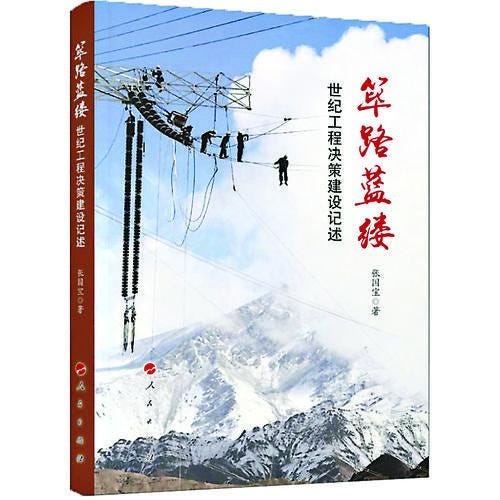
Author Zhang Guobao served as Vice Chairman of the National Development and Reform Commission (NDRC) from 2003 to 2011, was the first head of the National Energy Administration, and also led the West–East Gas Pipeline project. It was during his tenure that China built its national strategic petroleum reserve system from scratch and defined its operating model. Also, big thanks to my friend Mao Keji for the book recommendation. Every conversation with him is a lesson. Thomas des Garets Geddes from renowned Sinification newsletter did an interview with him last year, and I highly recommend it.
The Aoshan base in Zhoushan that Li Qiang inspected is in fact one of the Phase I national strategic petroleum reserve bases whose construction Zhang personally oversaw more than two decades ago. As an old Chinese saying goes, one must know not only what something is, but also why it is so. 知其然,知其所以然 I would like to take this opportunity to introduce Zhang’s account of that decision-making process to my readers.
The article opens with the first oil crisis of 1973, traces the birth and maturation of emergency petroleum reserve systems in Western countries, and then turns to the State Council’s formal decision in late 2002 to launch construction of national petroleum reserve bases. The most valuable parts of the piece are Zhang’s detailed accounts of three core decisions, namely siting, storage format, and operating model, along with lesser-known episodes such as seizing low oil prices during the 2008 financial crisis to fill the reserves, the push to domestically produce the high-strength steel plates needed for storage tanks, and attempts to expand reserves through idle tankers and futures operations.
My understanding is that the article tells several characteristic features of the Chinese decision-making model. The first is a flexible blend of government leadership and enterprise coordination. For the operating model, Zhang proposed a three-tier management structure. At the top sits the Petroleum Reserve Office of the National Energy Administration, responsible for policy and planning. In the middle is the National Petroleum Reserve Center, a public-service institution responsible for project implementation and day-to-day management. At the operational level, the actual work of construction, management, stockpiling, and release is contracted out to nearby state-owned oil companies (Sinochem, Sinopec, and CNPC). This setup preserves the government’s ultimate authority over strategic reserves, while drawing on the human capital, industry resources, and market responsiveness of the central state-owned enterprises, and avoids the fiscal cost of building yet another large bureaucracy from scratch.
The second is what the Chinese call “crossing the river by feeling the stones,” a kind of pragmatism that learns from Western experience without copying it wholesale. Reading Zhang’s account, one can clearly sense the influence of his study of the U.S. Strategic Petroleum Reserve. Yet when it came to institutional design, he placed greater weight on China’s own industrial capacity and market conditions. At the time, China lacked a mature ecosystem of oil companies and oilfield service providers; the market was overwhelmingly concentrated in the “three oil majors,”三桶油 and a fully marketized, U.S.-style competitive bidding system would have been neither meaningful nor feasible. At the same time, Zhang opposed the NDRC, a government agency, sending officials directly to run the bases. The three-tier management system emerged as the compromise. This habit of referencing without replicating is itself a fairly typical pattern in Chinese policymaking.
The third is gradualism, testing first and then scaling up. Phase one aimed simply to solve the problem of having a reserve at all. All sites were located along the eastern coast, close to demand centers, near large refineries, and convenient for seaborne imports, and they used the relatively mature aboveground storage tank format. Only after experience had accumulated and engineering capacity had improved, did Phase II gradually introduce the technically more demanding underground water-sealed rock cavern storage and extend further inland. This step-by-step quality is itself a distinctive part of the Chinese approach.
That said, Zhang’s memoir does not omit the shortcomings of the existing decision-making mechanism, and he repeatedly recounts how he tried to “work the edges” within the system to circumvent procedural inefficiencies. Funding for the petroleum reserve comes from the central budget. Each year’s stockpiling plan must first be drafted by the Reserve Office, then approved by the Ministry of Finance and the State Council before it can be carried out. The cycle is long, and opportunities to buy at price troughs are often missed. During periods of depressed oil prices, Zhang considered leasing idle tankers as floating storage and partnering with privately owned tank farms to expand capacity, but the idea fell through because the Ministry of Finance refused to pay rent to private operators. On another occasion, when prices fell below the $40-something range, Zhang told state-owned enterprise executives at a meeting to start stockpiling first and complete the paperwork later, saying he would take personal responsibility if anything went wrong. The companies, however, did not dare move, and the window closed. His candor about this tension between compliance and efficiency leaves a great impression.
Below is the English version of the article I made
The Decision-Making Process Behind China’s Strategic Petroleum Reserve
In 2015, international oil prices declined continuously. By late January 2016, U.S. West Texas Intermediate (WTI) crude oil futures had fallen below $30 per barrel, a drop of more than 60%. Currently, international oil prices hover around $50 per barrel and remain in a slump. Meanwhile, in 2016, China imported 380 million tons of crude oil, reaching a record level with a growth of 13.56%.
Faced with the sharp drop in international oil prices, everyone agrees that China’s earlier decision to establish strategic petroleum reserve bases during the period of high oil prices was an extremely wise and timely move. After the reserve bases were completed, they coincided with the drop in oil prices, allowing for bargain purchases that significantly reduced the cost of stockpiling oil, providing strong energy security for China’s future economic development.
As a participant in this decision-making process, looking back, I deeply feel that the decision was extremely correct and timely. However, the process was accompanied by repeated comparative analyses, demonstrations, overcoming difficulties, and accumulating experience—it was not as simple or easy as it might seem. This decision-making process fully reflects the strong sense of responsibility of China’s energy workers in ensuring national energy security, as well as their persistent efforts.
International Background
Internationally, strategic petroleum reserves were born out of the first oil crisis after World War II, strengthened during the second oil crisis, and continuously matured and improved through subsequent oil price fluctuations. During the first oil crisis of 1973-1974, the Organization of Petroleum Exporting Countries (OPEC) controlled production, causing crude oil prices to rise from $3 to $11 per barrel. This dealt a heavy blow to Western economies heavily dependent on oil imports, making developed Western nations realize that oil supply was an “Achilles’ heel” of their economies. Therefore, in 1974, OECD countries jointly established the International Energy Agency (IEA), requiring member countries to maintain reserves of at least 60 days of import volume to cope with oil crises. This is known as emergency oil reserves. Oil reserves include two forms: government reserves and corporate reserves, and member countries should provide mutual reserve support when necessary. The government reserves are also known as strategic petroleum reserves.
During the second oil crisis in the 1980s, primarily triggered by the Iranian Revolution, oil prices rose from $13 to $43 per barrel, further highlighting the vulnerability of oil-dependent economies in the face of oil price crises. The IEA then required member countries to increase oil reserves to more than 90 days of net imports. The oil reserve system was gradually improved and expanded. Since then, over 30 years have passed, and whenever international oil supply faces risks, IEA member countries mobilize their oil reserves. For example, the U.S. government released 33 million barrels of reserve crude oil to the market through direct sales during the 1991 Gulf War. The United States also once asked China, as another oil-importing country, to coordinate with the U.S. in releasing crude oil reserves and stabilizing international oil prices.
Through emergency oil reserves, Western countries have: first, effectively weakened oil-producing countries’ ability to use oil as a weapon to deter Western countries, preventing artificial supply shocks from occurring or occurring frequently; second, in the event of an actual supply crisis, mitigated the crisis risks by releasing crude oil reserves, minimizing the impact of oil supply shocks, and ensuring their own economic and political stability. It can be said that emergency oil reserves have become an important and effective energy protection measure and economic weapon for Western countries.
China’s Background
When Western countries established emergency oil reserves in the 1980s, some Chinese comrades who closely followed international developments proposed that China should also establish a strategic petroleum reserve. However, at that time, China’s oil supply still exceeded demand—China was an oil-exporting country—and there was no strong sense of crisis at the national level regarding oil supply shortages or interruptions. It was difficult to predict at the time that China’s future oil demand would grow rapidly and substantially, that China would become a net oil importer with external dependence exceeding 60%, and that it would become one of the world’s largest oil importers. Therefore, this proposal did not receive particular attention and was not implemented.
The year 1993 marked a major watershed in China’s energy supply and demand. Due to rapid economic development, crude oil imports increased sharply. That year, China transformed from a net crude oil exporter to a net crude oil importer, ending 30 years of oil self-sufficiency and slight surplus exports since the discovery of the Daqing Oilfield. Since then, crude oil imports have continuously reached new milestones. In 2004, they exceeded 100 million tons for the first time; in 2009, they exceeded 200 million tons; in 2014, they exceeded 300 million tons. In 2015, China’s oil import dependence reached 60.6%, and in 2016 it further rose to 65.4%. It was against this dramatically changing energy landscape that the necessity and urgency of establishing China’s strategic petroleum reserve became increasingly prominent. The research community and decision-makers gradually unified their views.
As China’s oil consumption and imports increased year by year, the Party Central Committee and the State Council, from the overall perspective of modernization and the need to safeguard national energy security, repeatedly issued important directives on establishing a national strategic petroleum reserve and ensuring national energy and economic security.
On March 17, 1996, the Fourth Session of the Eighth National People’s Congress approved the “Outline of the Ninth Five-Year Plan and the Long-Term Goals to 2010 for National Economic and Social Development of the People’s Republic of China,” which proposed “strengthening oil reserves.” In November 2000, at the Central Economic Work Conference, then-General Secretary Jiang Zemin explicitly required that projects related to the overall situation, such as establishing a national strategic petroleum reserve, be promptly studied and implemented as soon as possible. On March 20, 2002, the State Planning Commission submitted “Several Points on Increasing Crude Oil Reserve Facilities Construction” to the State Council. Then-Premier Zhu Rongji wrote on the report: “Please have the Planning Commission further demonstrate this, and submit it to the Premier’s Office Meeting for review and approval.” At the end of 2002, the Premier’s Office Meeting of the State Council heard and reviewed and approved “The State Planning Commission’s Request for Instructions on Establishing the National Petroleum Reserve Implementation Plan” (Ji Zonghe [2002] No. 2082), marking the official launch of China’s national petroleum reserve base construction.
Key Decisions in Construction
The construction of strategic petroleum reserve bases was put on the agenda. But where exactly should they be built? What management model should be adopted? Should aboveground oil depots or underground reserve depots be built? These questions, while seemingly very specific and minor, would greatly affect the construction process and work efficiency if not properly resolved. These decisions all underwent very detailed demonstration and research.
The First Question: Where to Start Construction?
When news spread that the state was preparing to build a strategic petroleum reserve, various regions became very enthusiastic, seeing it as an important opportunity to stimulate the local economy and the development of local petrochemical industries. However, due to China’s vast territory, varying levels of economic development, and existing petrochemical production capacities, plus the fact that this was an entirely new undertaking, pilot projects were necessary to accumulate experience before full-scale implementation. To this end, we invited the China International Engineering Consulting Corporation to organize experts to evaluate the site selection and other construction conditions, project investment, and safety production facilities for the national petroleum reserve base project. They proposed that “the establishment of a national petroleum reserve base should follow the principles of unified planning, rational layout, standardized management, and step-by-step progress, fully relying on and utilizing existing facilities.”
The first phase was to address the question of “to have or not to have,” choosing as soon as possible to build in the eastern coastal areas. The eastern region had large oil demand, more existing refineries, and oil reserves could serve refineries nearby. Meanwhile, the eastern coastal area had the advantage of being convenient for importing crude oil by sea.
In 2004, except for a small amount of crude oil transported across borders by railway from Kazakhstan and Russia, the vast majority of China’s imported crude oil was transported by sea.
In the end, four reserve projects were selected for the first phase, including the Zhoushan Aoshan, Ningbo Zhenhai, Qingdao Huangdao, and Dalian bases. All four locations were in the eastern coastal area, economically developed, with strong demand, and all had large refineries nearby. It was also determined at the time that subsequent second and third phase reserve projects could be built in suitable western regions to make the layout more rational and secure. Later, multiple locations in the southwest and northwest enthusiastically applied to build reserve bases. The second phase project arranged for several western petroleum reserve bases.
The Zhoushan Aoshan Port has an annual oil throughput of nearly 27 million tons. Aoshan Island is currently the largest petroleum reserve and throughput base in China.
The Second Question: What Management System to Adopt?
The U.S. strategic petroleum reserve management model is divided into two levels. At the management level, the Strategic Petroleum Reserve Office of the U.S. Department of Energy, located in Washington, D.C., is responsible for reserve policies and planning; the Project Management Office located in New Orleans is responsible for the implementation, operation, and management of specific projects. At the operational level, a market-based mechanism is adopted, with oil companies and base management companies determined through market bidding. Oil companies are responsible for procurement and release of reserves, while base management companies are responsible for the daily operation, maintenance, and security protection of reserve bases.
At the time, some comrades in the National Development and Reform Commission and the Ministry of Finance suggested partially imitating the U.S. model. The management level would be the same as in the U.S., but at the operational level, they proposed establishing specialized base management agencies responsible for base management as well as the procurement and release of crude oil at the bases. In other words, the Petroleum Reserve Office would manage everything from top to bottom—personnel, finances, materials, production, supply, and sales—forming a top-down management system. Other comrades suggested fully imitating the U.S. model.
But at the time, I believed that both approaches had flaws. If specialized base management agencies were established and personnel recruited, the state would have to pay various expenses for these agency staff, adding extra cost burdens to reserve work. Moreover, since talent and resources were concentrated in a few large state-owned oil and petrochemical enterprises at the time, it would be impossible to immediately recruit so many workers familiar with oil storage, procurement, and sales, which would inevitably affect reserve work efficiency. An office in Beijing might appear to have authority, but remotely directing base work could not effectively seize market opportunities for stockpiling oil, and in the event of safety accidents, responsibilities would be difficult to define. Fully copying the U.S. model was not feasible given China’s national conditions at the time. The U.S. oil market is fully market-oriented, with a large number of specialized oil companies and service companies that can quickly determine oil and management companies through bidding. But China’s oil market did not have the same conditions as the U.S., and this could not be achieved in the short term.
Both models had shortcomings. I believed that the U.S. model’s design at the management level was good. The main issue was at the operational level. To save operating costs and improve work efficiency, the U.S. model of determining the operational level through market bidding should be adopted. However, China’s oil was mainly concentrated in three major oil companies, and large refineries belonged to these three oil companies. Looking at it from another angle, China’s market structure is dominated by state-owned enterprises, and the interests of state-owned enterprises should be consistent with national interests. So we could directly delegate base management and operation as well as crude oil procurement and release responsibilities to oil companies near the bases. This would not only save various operational costs for the state but also fully utilize the talent and resource advantages of state-owned enterprises, improving work efficiency. At the same time, this allowed state-owned enterprises to obtain more information, hardware, and funds for their own operations through managing oil reserves. Since the construction and operational costs of oil reserves were funded by the national finances, this approach was also more acceptable to the Ministry of Finance.
At relevant meetings, I proposed establishing a three-level management model for petroleum reserves with Chinese characteristics, and everyone expressed support. A Petroleum Reserve Office would be established under the National Energy Administration as a government management agency responsible for top-level reserve policies and planning, representing the government in deciding the scale of stockpiling and the use of petroleum reserves. An institution similar to the U.S. Project Management Office would serve as a middle-tier public institution specifically responsible for project implementation and operational management. The operational level would be entrusted to nearby state-owned enterprises, which would be responsible for constructing and managing the corresponding petroleum reserve bases and bearing safety responsibilities. Crude oil reserve release would be operated by the enterprises according to the national plan prepared by the Petroleum Reserve Office.
Following this approach, in 2003, the Energy Bureau of the former National Development and Reform Commission added the sign of the National Petroleum Reserve Office, which later, with institutional reforms, was adjusted to become the current Reserve Office of the National Energy Administration, serving as the head of the petroleum reserve system. On December 18, 2007, the National Petroleum Reserve Center was officially established as a public institution under the National Development and Reform Commission, later adjusted to become a public institution under the National Energy Administration. As the middle tier of China’s petroleum reserve management system, it exercises investor rights, is responsible for the construction and management of national petroleum reserve bases, undertakes strategic petroleum reserve stockpiling, rotation, and utilization tasks, and monitors supply and demand changes in domestic and international oil markets. The operational level consists of reserve base companies funded by the state and entrusted to state-owned enterprises for management. Of the four first-phase bases, Zhoushan base was entrusted to Sinochem Corporation for management; Zhenhai and Huangdao bases were entrusted to Sinopec’s Zhenhai Petrochemical Company and Qingdao Refinery for management; Dalian base was entrusted to PetroChina’s Dalian Refinery for management. This saved on additional personnel allocation and also increased the daily operational management and safety responsibilities of the enterprises.
The Third Question: Aboveground Oil Depots or Underground Reserve Depots?
Since the United States has large salt domes concentrated in Louisiana and Texas near the Gulf of Mexico, close to the petrochemical industrial belt, most U.S. strategic petroleum reserve facilities are underground salt cavern oil storage facilities. Constructing such caverns is very easy—water is pumped into the salt dome to dissolve the rock salt, then the brine is extracted, leaving large underground cavities with good sealing properties. Construction and maintenance costs are very low. Countries without such natural conditions can only adopt the approach of building large aboveground oil tanks. There is also a type of underground water-sealed rock cavern, which refers to artificially excavating caverns of certain shapes and volumes in rock formations below the groundwater table for oil storage. This has the advantages of small land occupation, low construction and maintenance costs, and being safe and reliable. Being below the groundwater table ensures that the water pressure in the fissures is higher than the oil pressure inside the cavern, preventing oil leakage. Many regions in China have the geological conditions to build underground water-sealed rock caverns.
There was also debate about which approach to take. Some comrades believed that strategic petroleum reserves were related to national energy security and should imitate the U.S. model by building underground reserve facilities to maximize reserve safety. But eastern China did not have underground salt domes like those in the U.S. Building caverns required directly excavating in underground rock, with construction costs far exceeding aboveground tank construction. It was difficult to balance cost and safety. We held multiple meetings to discuss this. We comprehensively analyzed the main factors affecting reserve safety, including war factors and terrorist attack factors. These were problems that all countries generally faced, not unique to China. Therefore, we should not refrain from building aboveground oil depots. Future reserve facilities should combine aboveground oil depots with underground reserve facilities.
For the first phase, we would first address the question of “to have or not to have.” Everyone thought this made sense. Therefore, all four first-phase bases adopted the aboveground tank approach. Of course, considering that we had built underground water-sealed rock caverns for LPG in places like Yantai and Shantou, in order to accumulate experience with underground reserve facilities, we also considered adapting to local conditions and planning to build large underground water-sealed rock caverns in places like Qingdao Huangdao, where aboveground space was limited and underground geological structures were favorable. Using underground salt domes for oil storage was not adopted due to issues such as existing underground salt mines being far from the coast, insufficient salt layer thickness, and difficulty in brine treatment.
Construction Begins
After these issues were resolved, in March 2004, the National Development and Reform Commission held the launch meeting for the first-phase project construction of the national petroleum reserve bases. At the meeting, I delivered a mobilization report on advancing the first-phase project construction and signed project construction responsibility agreements with leaders of several group companies. The Zhenhai base was the first to begin construction, opening the curtain on China’s establishment of national petroleum reserves.
However, the first-phase project construction did not proceed entirely smoothly. The project encountered problems with the trial production and supply of domestic high-strength steel plates for large storage tanks, while the prices of imported steel plates multiplied. For this reason, I decided to organize relevant departments to undertake the localization of high-strength steel plates for large storage tanks. Through joint efforts from various parties, high-strength steel plates produced by Shanghai Baosteel Group, Wuhan Iron and Steel Group, and other companies successively passed certification by the National Pressure Vessel Standardization Technical Committee and welding process experiments by construction units. They were successfully promoted and used at reserve bases, breaking the monopoly of Japanese steel companies in China’s high-strength steel plate market, saving the country a large amount of construction funds, and improving the manufacturing level and competitiveness of domestic steel enterprises.
Through the joint efforts of project builders, the Zhenhai, Huangdao, Dalian, and Zhoushan bases were completed and put into operation in September 2006, December 2007, November 2008, and December 2008, respectively.
The completion of the first-phase project coincided with the outbreak of the 2008 global financial crisis, with international oil prices dropping from $150 per barrel to $50 per barrel. The four bases seized the opportunity to stockpile large amounts of cheap crude oil, completing oil injection in the first half of 2009. The average stockpiling cost was only about $56 per barrel. The base construction and crude oil stockpiling were a great success. I also wrote a special report on this to submit to State Council leaders.
Based on the successful experience of first-phase project construction, we organized and began compiling petroleum reserve plans. In 2008, the State Council approved the “National Petroleum Reserve Medium and Long-term Plan,” planning to complete three phases of strategic petroleum reserve base construction by 2020. Starting in 2009, the second-phase reserve bases were launched, with new reserve bases including Zhoushan (Phase II) and Huangdao (Phase II). The second-phase reserve bases included western regions and underground reserve facilities, making the reserve layout more comprehensive and the reserve methods more rational. The construction of national petroleum reserve bases entered a phase of normal progress.
Other Episodes Related to Petroleum Reserves
During this period, several other events related to petroleum reserves occurred.
In October 2008, I went to the Zhoushan base to inspect construction progress, accompanied by Comrade Zhong Ren from Sinochem Corporation, who was in charge of crude oil futures business. Comrade Zhong Ren was an expert in crude oil futures operations and had obtained substantial profits for Sinochem through futures hedging. He had been honored as a National Model Worker. During the inspection, he introduced crude oil futures to me, and I learned a lot about hedging. One evening after dinner, while taking a walk, I was chatting with my secretary.
I said: International oil prices are currently falling, our reserve facilities are nearly full, and we have no way to buy more oil. To seize the opportunity of falling oil prices, we could lock in some cheap crude oil by purchasing futures. Even if futures prices continue to fall in the short term, they will certainly rise again in the long term. As long as our purpose of buying futures is not speculation but to obtain physical crude oil in the future, we will definitely buy cheap crude oil in the long term. I judge that oil prices are currently at a low level, and taking the opportunity to buy futures should be cost-effective. Even if price fluctuations occur, as long as we are not speculating, the risks are controllable.
In early spring 2009, I went to inspect the construction of the Dalian petroleum reserve base. Comrades from the Dalian shipbuilding industry told me that due to the international financial crisis, many shipowners had tight cash flows and could not pay shipbuilding fees, resulting in many new ships, including oil tankers, being stranded at shipyards. At the time, there were reports that some European countries were using idle oil tankers to stockpile crude oil at low prices. I thought at the time that we might as well lease these semi-finished oil tankers that shipowners did not want. Without installing power or other equipment, we could directly tow the sealed hulls to nearshore waters as floating oil storage bases, which would solve the current problem of insufficient storage capacity—a multi-purpose solution.
I shared this idea with the comrades from the National Petroleum Reserve Center who accompanied me, and everyone thought it was a good approach. Later, the National Petroleum Reserve Center cooperated with China Shipbuilding Heavy Industry Group to research and propose a plan to directly manufacture Very Large Crude Carrier (VLCC) modules at the shipyard and place them on hard bedrock tidal flats in a sit-on-bottom manner, building large petroleum reserve facilities in a short time.
When oil prices were low, I hoped to take advantage of low prices to increase stockpiling. At that time, most reserve bases had not been completed, and we had considered using private oil depots, but private oil depots were small in scale, and their port locations could not accommodate large oil tankers. More importantly, the Ministry of Finance did not agree to pay rent to private oil depots, so this did not materialize.
I wrote specific reports to the State Council on these ideas. However, possibly due to the complexity of the operations, the Ministry of Finance had different opinions, especially regarding futures operations, which everyone still had doubts about. So they were not actually implemented. Looking back now, it is very regrettable. But I think these ideas can serve as a vision for future diversified petroleum reserves. Gratifyingly, there are now private enterprises building 3 million cubic meters of private reserve facilities in Yangpu, Hainan, pioneering private enterprise participation in stockpiling.
Due to our system, petroleum reserve funds are provided by the Ministry of Finance. The annual stockpiling amount is first proposed by the Reserve Office, then sent to the Ministry of Finance for joint signing. After the Ministry of Finance agrees, it is jointly submitted with the National Development and Reform Commission to the State Council for approval before implementation. So this decision-making process is very slow, often missing the best opportunities to stockpile when oil prices are low.
Once, when oil prices fell to over $40 per barrel, I urgently convened a meeting. I believed that oil prices had basically fallen to the bottom and we should stockpile quickly. I asked PetroChina, Sinopec, and Sinochem to act quickly while initiating the procedures for joint signing with the Ministry of Finance and submission to the State Council. I knew that international oil prices change rapidly, and by the time approval came through, the moment would have passed. So at the meeting, I said: After everyone returns, act immediately. Don’t wait for approval to come down before acting. If problems arise, I will take responsibility. But no one dared. PetroChina bought a small amount, but later, seeing no approval document, sold it off.
Another incident: On July 16, 2010, a crude oil tank fire accident occurred at PetroChina’s Dalian commercial reserve depot. I happened to be on a business trip to Dalian. Because I did not know in advance which oil depot was on fire, I thought it was the Dalian reserve base. I quickly rushed to Dalian’s Xingang Port to participate in the firefighting operations organized by the on-site emergency command. Only later did I learn that it was not the Dalian reserve base but a commercial reserve depot of an enterprise. Afterward, an accompanying staff member asked me whether insurance had been taken out. Inspired by this, I thought about the insurance issue for state-stored petroleum. Upon returning to Beijing, I immediately convened a meeting. At the time, the national petroleum reserve bases were indeed not insured, and there had even been lightning strikes.
The Reserve Office and Reserve Center then negotiated with the Ministry of Finance. With the support and leadership of the Ministry of Finance, starting in 2011, the National Petroleum Reserve Center selected several insurance companies through bidding and insured all assets of the four first-phase bases, also building lightning protection devices.
Underground Water-Sealed Rock Caverns
By the time China’s first large underground water-sealed rock cavern was completed, I had already retired. I took advantage of the time before the cavern was sealed to go deep into the underground cavern for a detailed inspection. Underground water-sealed rock cavern oil storage is quite common in Europe, especially in Sweden where it has a history of sixty to seventy years, from military to civilian use. They had also wanted to transfer technology to China, but later we had mastered the technology ourselves and could basically build it independently. Through the inspection, I corrected the previous misconception that underground water-sealed rock caverns were expensive to build—in fact, construction costs are even lower than aboveground oil storage facilities, with less land occupation and lower operating costs. Only the construction period is longer. China has very strong tunnel and culvert construction teams in hydropower and railway construction, and we should strive to build more underground water-sealed rock caverns where conditions permit.
I later reported the situation of the first large underground water-sealed rock cavern to relevant departments through the National Development and Reform Commission’s “Economic Situation and Suggestions,” which received attention and was also prepared for application to refined oil reserves. In subsequent construction, multiple underground water-sealed rock caverns were planned, some of which have already been completed.
The Aoshan Base
The reserve base located on Aoshan Island in the Zhoushan Islands is the only base managed by an entity other than the three major oil companies—it is managed by Sinochem Group, because Sinochem Group originally had its own enterprise reserve depot at Aoshan. After the Aoshan base was completed, it was spectacular. Sinochem Group organized retired cadres to visit, and these old comrades were extremely excited about the country’s construction achievements when they saw each 100,000 cubic meter large oil storage tank that had been built.
When General Secretary Xi Jinping was serving as a leader in Zhejiang Province, he was very concerned about the construction of the Aoshan petroleum reserve base and visited the base on the island. After becoming General Secretary, when inspecting Zhejiang, he made a special trip to inspect the Aoshan base and gave important instructions.
When a central leader inspected the Aoshan base, base leaders reported that there were still a small number of residents on the island and hoped the state would fund the relocation of all residents on the island, turning the entire island into a reserve base for greater safety. After receiving the opinion forwarded by this central leader, I coordinated with the Investment Department of the National Development and Reform Commission to allocate 300 million yuan, turning the entire Aoshan Island into a reserve base.
After the Aoshan base was completed, it was spectacular. Sinochem Group once organized retired cadres to visit, and these old comrades were extremely excited about the country’s construction achievements when they saw each 100,000 cubic meter large oil storage tank.
When I saw the rows upon rows of huge white storage tanks, I was also very moved and composed a poem to the tune of “Xi Jiang Yue”:
Xi Jiang Yue · Zhoushan Aoshan Island西江月·舟山岙山岛
Commemorating the Completion of the National Petroleum Reserve Base建成国家石油储备基地The East China oil pipeline begins at Aoshan, passes through Cezi Island, crosses the Xihoumen Strait shipping channel, lands at Jintang Island, and goes along the Yangtze River to Wuhan.
华东输油管道起自岙山,经册子岛,穿过西堠门海峡航道,经金塘岛登陆,沿长江直到武汉。
Five years of planning and construction, finally bearing fruit.五年筹划建设,终成正果。
Putuo, the Buddhist realm of sea and sky,
海天佛国普陀,散落岛屿星罗,
Islands scattered like stars,
Aoshan suddenly displays white encampments,
Erecting giant tanks one after another.岙山惊现白营盘,筑起巨罐座座。
Looking like masts joined to the clouds,
Yet it is national reserve crude oil.观似连云樯橹,却是国储原油。
Sea pipelines pass through Xihoumen,
Directly supplying Jiangsu, Anhui, Hunan, and Hubei.海上管道穿西堠,直输苏皖湘鄂。
In the past, many petrochemical plants were laid out along the Yangtze River, such as Yangzi Petrochemical, Anqing Petrochemical, Jiujiang Petrochemical, Wuhan Petrochemical, Yueyang Petrochemical, etc. The crude oil they needed was transported upstream by Changjiang Shipping Company’s vessels. After the Aoshan base and the Yangtze River pipeline were completed, the crude oil needed by these petrochemical enterprises along the river was mainly switched to pipeline transportation, saving transportation costs. But a problem arose: the operations of Changjiang Shipping Company were affected. For this reason, I conducted special research and approved Changjiang Shipping to develop ocean transportation business, and asked Sinopec to give Changjiang Shipping some refined oil transportation business.
The completion of the first-phase national petroleum reserve bases coincided with the oil price drop caused by the 2008 international financial crisis. When the second-phase national petroleum reserve bases were successively completed, they coincided with the oil price drop caused by the 2015 global economic slowdown. China’s strategic petroleum reserve has accumulated very rich and successful experience in site selection and layout, operational models, and timing.
Facing the rapidly changing international economy and oil market, as long as we continue to learn from international experience, realistically combine it with China’s national conditions, remain humble and prudent, and pioneer innovation, we will surely grasp the laws of economic development and international oil price changes, build a good strategic petroleum reserve, and provide solid energy security for the country’s economic construction.
Shows how indispensable state planning is!😀