

While most attention is drawn to the crisis in the Strait of Hormuz, there’s another ongoing conflict in the region. The border clashes between Pakistan and Afghanistan have deepened the Afghans' isolation and impoverishment under Taliban rule since 2021, and are being pushed deeper into crisis.
For today’s piece, I want to introduce an interview with Dr. Liu Zongyi, Director of the Center for South Asia Studies at the Shanghai Institutes for International Studies (SIIS), who shares firsthand observations from a four-day visit to Kabul at the invitation of the Taliban’s Ministry of Foreign Affairs. There, he held extensive discussions with Taliban diplomats.
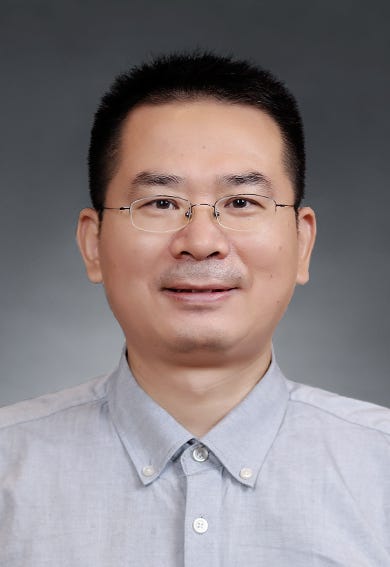
Dr. Liu holds a bachelor’s degree from Shandong University of Finance and Economics, and a master’s and doctoral degree in International Relations from China Foreign Affairs University. He has served as a visiting scholar at the German Institute of Development and Sustainability (IDOS, formerly DIE), the OECD Heiligendamm Process Support Unit, the Center for Strategic and International Studies (CSIS) in Washington, D.C., the National Institute of Public Finance and Policy (NIPFP) in India, and the Institute of Strategic Studies Islamabad (ISSI).
He observed that while the Taliban seeks investment from China, it refuses to cooperate on Beijing’s core security concern to expel the presence of the East Turkistan Islamic Movement (ETIM) on Afghan soil.
The Taliban government, it seems, has inherited the aid-dependent mentality of its predecessors. During the visit, a Foreign Ministry official handling China affairs even asked: “Look how much the US and the EU give us every year — what China has given us over the past five years doesn’t even amount to a fraction of that. Have you no shame?”
Yet for all the Western money that has flowed into Afghanistan, little of it appears to have reached ordinary people. Liu talked with Chinese citizens in Afghanistan, who described the system as the Americans took most of the share, while Afghan middlemen, involved in procurement, logistics, and translation services for the Americans, seized the opportunity to enrich themselves, amassing considerable personal fortunes in the process.
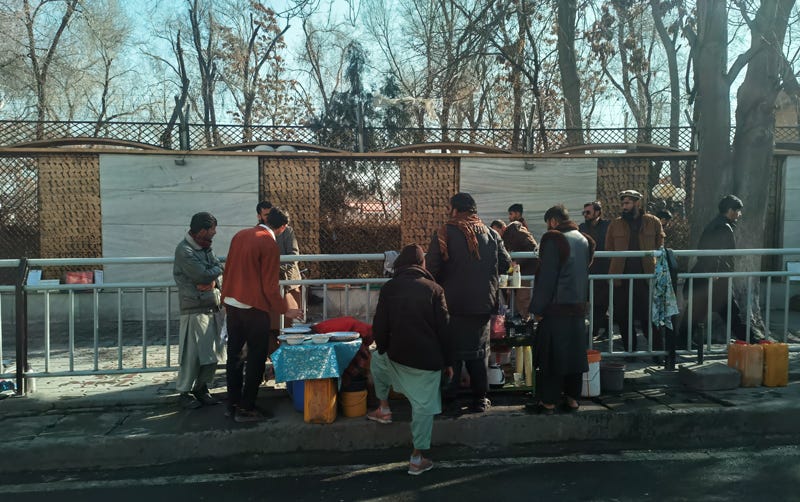
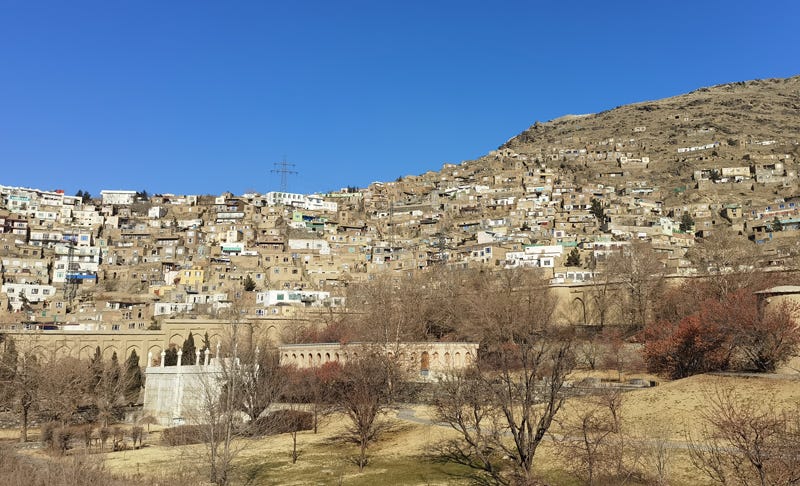
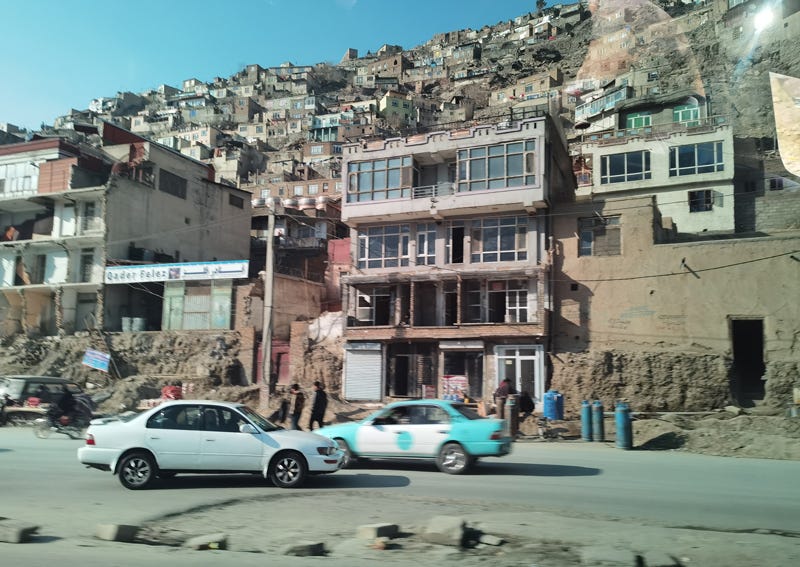
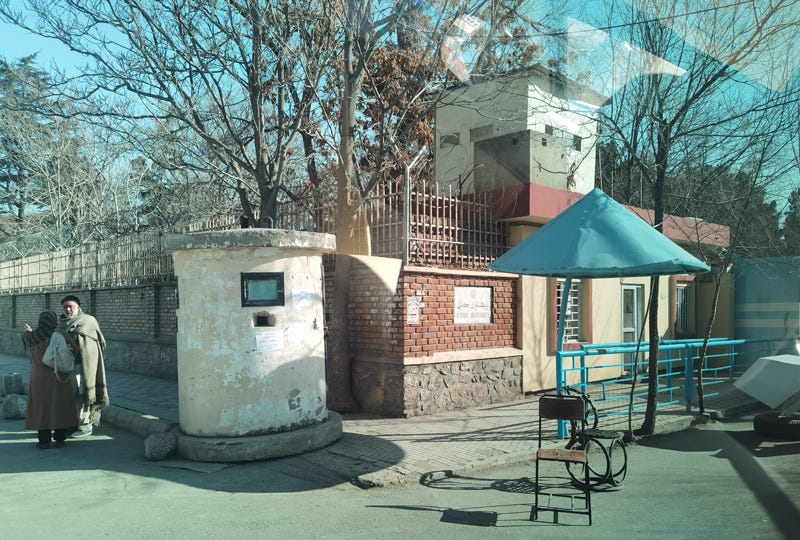
On the ground, Dr. Liu describes a Kabul where armed men roam the streets, beggars are everywhere, women have largely vanished from universities and workplaces, and the few Chinese nationals remaining operate small restaurants. Basically, the commercial is shrinking.
Dr.Liu was shocked that the Taliban’s young, many Western-educated diplomats, with PhDs from universities in Malaysia and New Zealand, who nonetheless defer completely to the ultraconservative religious authority in Kandahar. There’s tension between the Taliban’s desire for international recognition and its commitment to building what its clerical leadership envisions as “the world’s purest Islamic state.”
This interview was originally done in Chinese by Guancha Net. Thanks to Dr.Liu’s authorization, I can put the English version here. (Dr. Liu also provided some pictures he took, but due to the length limit of the newsletter, I couldn’t include them all here)
Guancha Net: In your exchanges with Afghan government officials, did you get a sense of what concerns them most?
Dr. Liu: In our conversations, the issue they raised most frequently was their hope that China would come and invest.
Their current foreign policy doctrine centers on what might be called “economy-first balanced diplomacy.” They subscribe to the notion that economics is politics, and seek to leverage economic cooperation as a platform to normalize bilateral relations with China, Central Asia, and other countries and regions. According to them, they are willing to establish formal diplomatic relations with anyone willing to engage — regardless of past grievances, no questions asked.
Guancha Net: It has been over four years since the Taliban returned to Kabul in August 2021. We know they previously generated revenue through opium cultivation, but in 2022 their supreme leader, Hibatullah Akhundzada, issued a decree banning poppy cultivation and the trade of related products nationwide. What is the situation now? And what steps has the Taliban government taken on the economic front over these years?
Dr. Liu: Drug cultivation has not been entirely eradicated. Their economy currently rests on two main pillars: agriculture and livestock on the one hand, and international aid on the other. That said, assistance from the US and other Western nations has been drastically reduced. Funding from the World Bank and the United Nations, however, continues to flow — large sums arrive in Kabul every month to sustain the basic livelihoods of the population.
On the whole, the Afghan economy has shown modest but steady improvement since the Taliban’s return to power. However, overall output has yet to recover to the levels seen under the former Ghani government prior to 2020.
Guancha Net: Based on everything you have observed, what is the single greatest bottleneck preventing Afghanistan from achieving self-sustaining economic development? Is it a shortage of capital, a lack of technology, international isolation, weak domestic governance — or something else entirely?
Dr. Liu: All of the above. A major reason many countries are reluctant to invest in Afghanistan is that the United States has yet to lift its financial sanctions on the country. This means foreign capital struggles to enter, and even when it does, any profits earned are extremely difficult to repatriate. Beyond that, Afghanistan’s domestic investment environment remains deeply inhospitable, with security being the single most formidable obstacle.
Under the Karzai and Ghani governments, terrorist attacks were rampant across Afghanistan — the majority of which were carried out by the Taliban themselves. Now that the Taliban are back in power, the overall security situation has improved noticeably compared to those years. Yet serious challenges remain. Organizations such as ISIS-Khorasan Province (ISIS-K), the Eastern Turkistan Islamic Movement (ETIM), Tehrik-i-Taliban Pakistan (TTP), and the Balochistan Liberation Army (BLA) continue to operate on Afghan soil. Some have even relocated their headquarters back into the country and are in a position to expand further.
Guancha Net: Ambassador Fu Cong made a point of raising this very issue in his remarks at the UN Security Council open debate on Afghanistan on March 9, stating that “eradicating terrorism is the foundation of security.” What is the Taliban’s posture on this question?
Dr. Liu: Security — and the ETIM issue in particular — has become the thorniest sticking point in our exchanges with the Taliban. They expressed confidence that ETIM is now entirely under their control, yet at the same time made clear they are unwilling to fully accommodate China’s demands on the matter.
They offered us several reasons. Historically, many members of these organizations fought alongside the Taliban against the Soviet invasion, creating bonds of so-called “battlefield brotherhood.” On the religious front, they share the Islamic faith. Under Pashtun tribal custom, they are duty-bound to protect those who seek refuge rather than hand them over. And at the societal level, these individuals have forged ties with local Afghans through intermarriage and other social bonds. For all these reasons, the Taliban indicated they are unwilling to make easy concessions on this issue.
Complicating matters further, ETIM has now pledged allegiance to the Taliban government and is helping maintain order in certain areas — a reality that makes the diplomatic equation all the more intractable.
Guancha Net: There seems to be something inherently contradictory about refusing to cooperate on security while simultaneously expecting large-scale Chinese investment.
Dr. Liu: Indeed. And this is precisely why their society remains so heavily dependent on international aid. During our visit, the Foreign Ministry official responsible for China affairs said to us point-blank: “Look how much the US and the EU give us every year — what China has given us over the past five years doesn’t even amount to a fraction of that. Have you no shame?” We pushed back on the spot: “Your problems are not of our making. Afghanistan’s current predicament has nothing to do with us. Whatever aid we provide is purely humanitarian — you can hardly compare us to the very Western powers that wreaked havoc in your country.” He seemed to realize he had overplayed his hand and dropped the subject after that.
According to some Chinese nationals familiar with the local scene, Afghanistan’s historical position astride major trade routes has bred a distinctive national trait: the people are remarkably skilled at what might politely be called “creative persuasion.” Over its twenty-year occupation, the United States poured roughly two trillion dollars into Afghanistan, yet barely managed to build a single decent road. A large part of the reason is that funding was siphoned off at every level — the Americans took the lion’s share, while locals involved in procurement, logistics, translation services, and other support roles seized the opportunity to enrich themselves, amassing considerable personal fortunes. These figures need further verification, but Kabul has undeniably seen the emergence of quite a number of ultra-wealthy individuals.
Guancha Net: Do you have a sense of what industries Chinese nationals in Afghanistan are currently engaged in? And how are they faring?
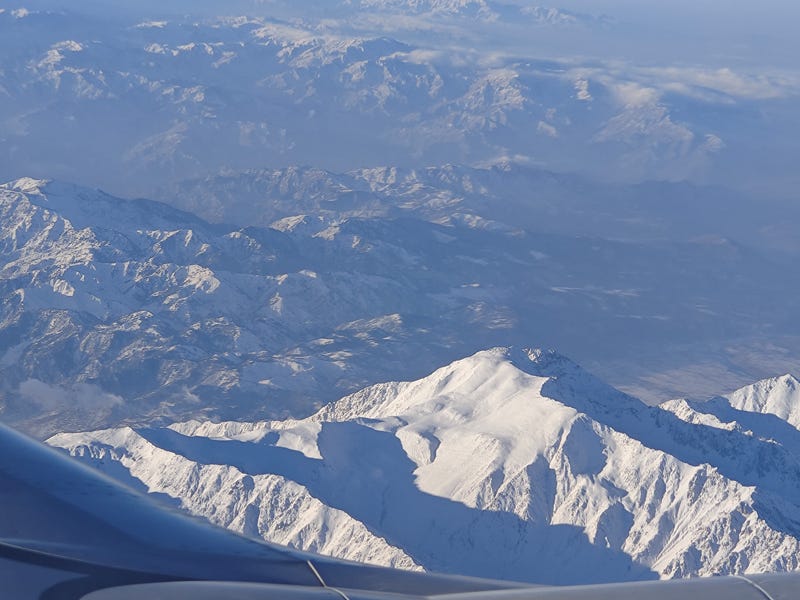
Dr. Liu: I specifically asked officials at the Chinese Embassy in Afghanistan about the exact number of Chinese citizens currently in the country, but even they were unable to provide a precise figure. There are two main reasons: first, Afghanistan’s customs system is not yet digitally interconnected, making accurate tracking difficult; second, Chinese travelers do not necessarily fly directly from China — we ourselves, for instance, flew to Dubai first and then connected to Kabul, which further complicates the count.
As for the industries in which Chinese nationals are active, state-owned enterprises have very little presence in Afghanistan from what I understand. A mining project originally slated to commence development after the Spring Festival was shelved following the terrorist attack on a Chinese restaurant in Kabul on January 19. The Taliban, fearing the incident would spook foreign investors, initially tried to cover it up by claiming it was a gas explosion. Additionally, the Taliban previously terminated a 25-year exclusive development contract awarded to a Chinese firm for the Amu Darya oil field — reportedly in exchange for an EU aid package, one of whose conditions was the cancellation of that very partnership with the Chinese company.
Among Chinese enterprises in Afghanistan, not only are state-owned firms scarce, but private ones are few and far between as well — only a handful of private companies maintain representative offices. Overall, formal commercial activity is steadily contracting, with some operations having ceased altogether. At the individual level, apart from small-scale entrepreneurs running restaurants or trading in Chinese herbal medicines, there are also a number of risk-takers lured by the prospect of fortune in dangerous lands — people hoping to try their luck in mining or prospecting.
Guancha Net: From what you personally observed on the streets of Kabul, what is the most honest picture you can paint of local social order and everyday life?
Dr. Liu: For this trip, the Afghan Foreign Ministry provided us with two armored SUVs. On certain occasions, armed police from the Chinese Embassy also provided on-site security to guard against potential attacks. On the streets of Kabul, armed individuals are a ubiquitous sight. On the one hand, the Taliban currently have no standardized military uniforms, so their soldiers are largely indistinguishable from civilians — most wear turbans and traditional robes. On the other, after decades of war, virtually every household in Afghanistan is said to possess firearms.
Moreover, given Afghanistan’s dire economic conditions and extremely high unemployment, beggars are a common sight on the streets. People familiar with the local situation warned us that because of the proliferation of weapons, a short visit without any financial commitment is one thing — but if you actually invest money, certain locals may begin to take a calculating interest in you.
Guancha Net: The rights of women and girls are among the international community’s primary concerns regarding Afghanistan — Ambassador Fu Cong addressed this in his remarks as well. Did you have any opportunity to observe the real living conditions of women, whether on the streets of Kabul or in specific settings? Since returning to power, the Taliban have enacted numerous bans restricting women’s access to education and employment. From your observations, is there any “room for flexibility” in how these bans are actually enforced?
Dr. Liu: The Afghan government’s cabinet is based in Kabul, but the supreme leader Akhundzada resides year-round in Kandahar, his birthplace, and all major national decisions are made from there. Akhundzada is surrounded by a circle of theological clerics who are deeply devout and aspire to build Afghanistan into “the purest Islamic state on earth” — ideologically, they gravitate toward something resembling a return to the medieval era. In other words, they are profoundly conservative, which is precisely why policies such as the ban on girls’ education have been enacted.
From my own observations during this trip, women were still visible on the streets. Most wore black abayas and headscarves; some had their faces covered rather thoroughly, while others — particularly younger women — did not veil their faces at all. Some women were out on their own, though more commonly it was mothers accompanied by their children.
At Kabul University, however, we did not see a single woman. At the hotel where we stayed for four days, we encountered only one female staff member — the front desk was manned exclusively by men for the first three days, and it was not until checkout on the final day that a woman suddenly appeared to process our bill. In today’s Afghanistan, women are generally not permitted to work. As for why she was allowed to, we did not dare ask.
Guancha Net: If I recall correctly, when the Taliban first returned to power, they co-opted a number of technocrats from the broader society. At the time, many scholars and observers hoped these individuals might help modernize the Taliban’s governance capacity. Yet judging from the subsequent marginalization of these figures and from your analysis, reality appears to have diverged sharply from those initial expectations.
Dr. Liu: One thing that genuinely surprised me on this trip was that the Foreign Ministry officials we dealt with — directors-general, deputy directors-general, and the like — were mostly born in the 1980s and 1990s. Some had received higher education abroad, in countries like Malaysia and New Zealand; a few even held doctoral degrees. And yet their deference and obedience to Kandahar was absolute.
This speaks volumes about Akhundzada: not only is he a hardened political operator, but he enforces an exceptionally rigorous standard of ideological discipline. My personal sense is that the reason these Western-educated young officials display such reverence for religious authority has everything to do with the family and social environments in which they were raised.
Guancha Net: And how do they view international concern over women’s rights in Afghanistan?
Dr. Liu: They believe the outside world has it wrong. In their view, the Taliban face two principal challenges on the international stage since returning to power. The first is the narrative battle over their international image — they are convinced that their negative reputation is entirely a Western construct. The second is what they see as a fundamental gap in the outside world’s political understanding. They regard themselves as a revolutionary government, one bound by a strong internal cultural identity with its own framework for understanding ideology and international relations — and yet the world insists on treating them as a problem to be solved.
Frankly, I believe the Taliban leadership suffers from certain cognitive blind spots. They have a limited understanding of the outside world and seem disinclined to learn more, which has left them without an objective assessment of their own standing. For example, they are well aware that India is an unreliable partner, yet they have deliberately courted New Delhi in order to pressure Pakistan — a move that has deeply antagonized Islamabad. Or take the case I mentioned earlier: terminating an oil field development partnership with a Chinese company in exchange for an EU aid package. In my view, these are profoundly short-sighted decisions.
Below is Dr. Liu's analysis of how this crisis intersects with the US–Iran confrontation, published in another piece:
Against the backdrop of ongoing US and Israeli military strikes on targets inside Iran, the risk of conflict spillover poses multiple direct threats to Pakistan.
First, Pakistan and Afghanistan remain in a state of active hostilities. Although China-brokered trilateral talks among China, Afghanistan, and Pakistan are currently underway in Xinjiang, whether a ceasefire can be achieved remains uncertain. The principal obstacle lies on the Afghan side. Beyond the reasons we analyzed in our previous conversation, there is another important factor behind the Afghan Taliban’s sheltering of insurgent and terrorist organizations such as the TTP and ETIM: ETIM’s headquarters is located in Afghanistan, and Western countries — seeking to undermine China’s unity and stability — have funneled substantial funds to the group. In other words, ETIM effectively operates a global fundraising network, and the Taliban are able to tap into a steady stream of revenue through their so-called “protection.” The TTP, too, enjoys the backing of regional or international actors. If Afghanistan and Pakistan cannot reach an agreement on the issue of terrorist organizations, the war between them will be exceedingly difficult to bring to a definitive end.
Second, should the conflict spill over further, the United States and Saudi Arabia may seek to use Pakistan as a corridor for deploying forces against Iran. Pakistan shares a long border with Iran — in particular, Pakistan’s Balochistan province abuts Iran’s Sistan-Baluchestan province to the southeast. The Balochistan issue is an existential concern for Pakistan. If insurgent groups such as the Balochistan Liberation Army exploit the chaos of a US–Israeli–Iranian war and the Afghan–Pakistani conflict to secure support from countries like India and expand their strength — and then link up with Baloch populations inside Iran — Pakistan could face a genuine risk of territorial disintegration.
Furthermore, Pakistan is home to a substantial Shia population. Should Pakistan be drawn into a war against Iran, its Shia citizens would clearly not side with the government, compounding the risk of national fracture.
On top of all this, Pakistan is heavily dependent on oil imports from Gulf states such as the UAE and Saudi Arabia. An escalation of the war would trigger a severe energy crisis — and given that Pakistan’s domestic economy is already struggling, an energy crisis is the last thing its leadership wants to see.
Pakistan thus finds itself squeezed between Saudi and American pressure. Its goal is to avoid antagonizing either side while giving all parties a satisfactory account of its actions. This is why it has stepped forward as a mediator: by passing messages that help shield Saudi Arabia’s critical infrastructure from attack, it deflects Riyadh’s demands for direct involvement; by easing the awkwardness for Trump, it extends the US–Pakistan honeymoon; and all the while, it safeguards its own oil supply.
Liu Zongyi has a great grasp of what makes Southern Asia tick. Esp. on the delusional Delhi elite. I have come across his interviews in Guancha. Has he written a book in English?
Great read!